EUR / USD
Source: Massive (polygon.io)
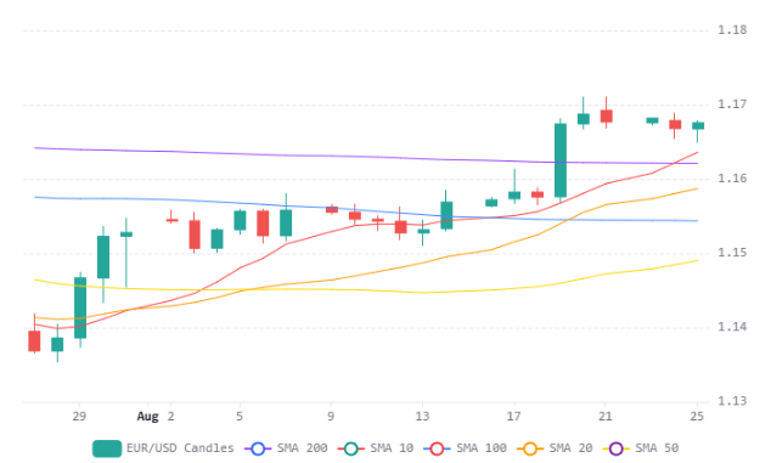
The EUR/USD pair is trading near 1.1676, supported by a confluence of divergent monetary policies, weakening U.S. economic data, and structural pressures on the dollar. The ECB is poised to raise its deposit rate by 25 basis points at its September meeting—priced at 94-95% probability—driven by a resilient Eurozone economy where the composite PMI expanded to 52.1 in August and Germany's manufacturing PMI reached a 54-month high. In contrast, the U.S. fundamental backdrop is increasingly dollar-negative, with consumer confidence falling to a seven-month low of 89.4, new home sales plunging 10.5%, and the probability of a Fed rate hike in September declining to roughly 35-40%.
Structural headwinds for the greenback are compounding cyclical weakness, as the Treasury's decision to double long-bond buybacks has raised concerns about fiscal credibility and potential currency debasement, with multiple analysts noting the dollar is trading weaker than interest rate models would suggest. The economic surprise gap between Europe and the United States has widened to its most euro-favourable level since February 2023, reinforcing the fundamental case for continued EUR/USD strength.
From a technical perspective, the pair sits comfortably above its 200-day, 50-day, and 20-day moving averages, though the daily RSI near 70 signals approaching overbought conditions that could trigger a mean-reversion pullback toward the 1.16 area. A decisive break above resistance at 1.1707 could open the path toward significantly higher levels, particularly if Wednesday's PCE inflation report and Fed Chairman Warsh's Jackson Hole speech on Friday reinforce rate-hike scepticism. However, one major bank assessment suggests the pair is already near fair value given that ECB hikes are largely priced in, which may cap further upside absent a material shift in the macro outlook.
USD / JPY
Source: Massive (polygon.io)
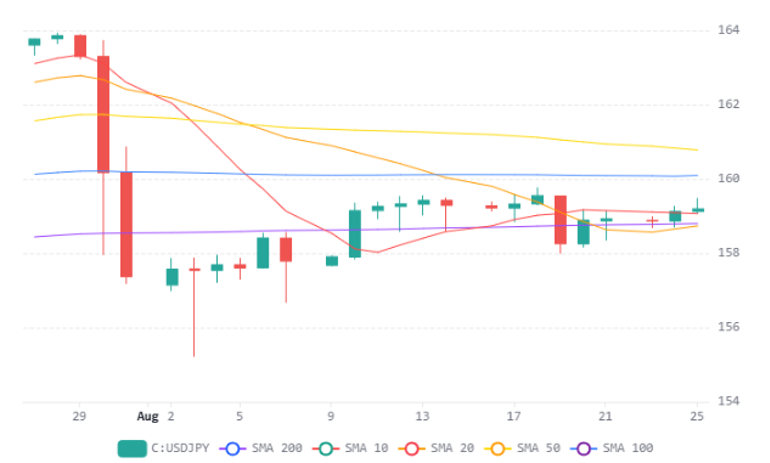
USD/JPY is consolidating around 159.20 in a technically neutral posture, with price sitting just above the 200-day SMA at 159 while facing overhead resistance near 160 and the 50-day SMA around 161. The daily RSI at approximately 46 confirms the lack of directional conviction, as the pair remains range-bound following its sharp decline from July highs above 164.
The fundamental backdrop is defined by the tension between an accelerating BOJ tightening cycle and persistent structural yen weakness. A Reuters poll shows 57% of economists now expect the BOJ to raise rates to 1.25% at its September 18 meeting, driven by inflation concerns from the U.S.-Israeli war with Iran and explicit encouragement from U.S. Treasury Secretary Bessent. However, the interest rate differential remains substantial, with the BOJ's current 1.00% rate far below the Fed's 3.50%-3.75% range, continuing to incentivize carry trades that pressure the yen.
Japan's fiscal trajectory compounds the challenge, as PM Takaichi's unfunded spending plans and a 249% debt-to-GDP ratio—alongside 10-year JGB yields at 2.93%, the highest since 1996—threaten to overwhelm BOJ tightening efforts. On the U.S. side, softening data including a 10.5% drop in new home sales and declining consumer confidence suggest potential dollar headwinds, with markets pricing only 34-40% odds of a September Fed hike. The near-term resolution for USD/JPY likely depends on whether a break below the critical 159 support materializes on BOJ action, or whether Japan's fiscal vulnerabilities and the wide rate differential reassert upward pressure toward 161.
GBP / USD
Source: Massive (polygon.io)
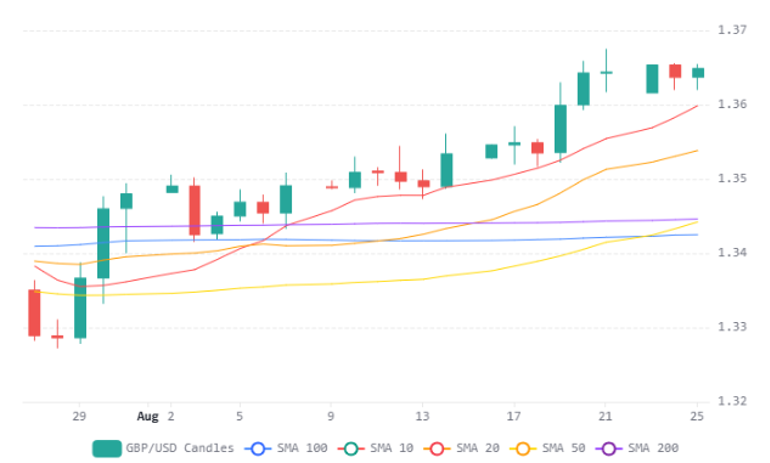
GBP/USD continues to trade near six-month highs around 1.3649, underpinned by a clear macro divergence between a hawkish Bank of England outlook and a structurally weakened U.S. dollar. UK inflation at 2.9% and surging inflation expectations (Citi/YouGov 12-month expectations jumping to 3.9% from 3.4%) reinforce the case for further BoE tightening, while the Fed remains in a holding pattern with only a 34-40% probability of a September rate hike priced in.
The dollar faces multiple headwinds including a seven-month low in CB Consumer Confidence at 89.4, a 10.5% collapse in New Home Sales, and credibility concerns surrounding the Treasury's decision to double long-dated bond buybacks. Easing geopolitical tensions and the resulting 3% drop in oil prices have further reduced safe-haven dollar demand.
From a technical perspective, the pair sits well above its 200-day, 50-day, and 20-day SMAs, confirming the bullish trend, though the daily RSI near 70 signals overbought conditions that warrant caution against chasing the move higher. The key risk events ahead are Wednesday's PCE inflation report and Fed Chair Warsh's Jackson Hole speech on Friday, either of which could recalibrate rate differential expectations and determine whether sterling can break above the 1.3664 weekly high to target the 1.37 handle or succumb to mean-reversion toward the 1.35 area.
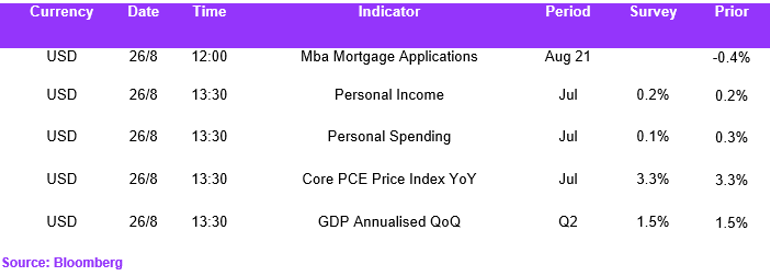
Economic Calendar