



Price Discovery: From Tariff Shock to China Confidence
The offshore yuan's (CNH) appreciation since the US tariff shock in April 2025 initially looked counterintuitive. After briefly weakening towards 7.35 per dollar on fears of slower exports, capital outflows and a more tolerant policy stance, the move quickly reversed. Since then, the yuan has gained more than 9% against the dollar, reaching 6.75, making it one of the strongest-performing Asian currencies over the period.
CNH Performance vs other Asian currencies
CNH has led Asian FX since April 2025, pointing to a more limited tariff impact on China than the wider region.
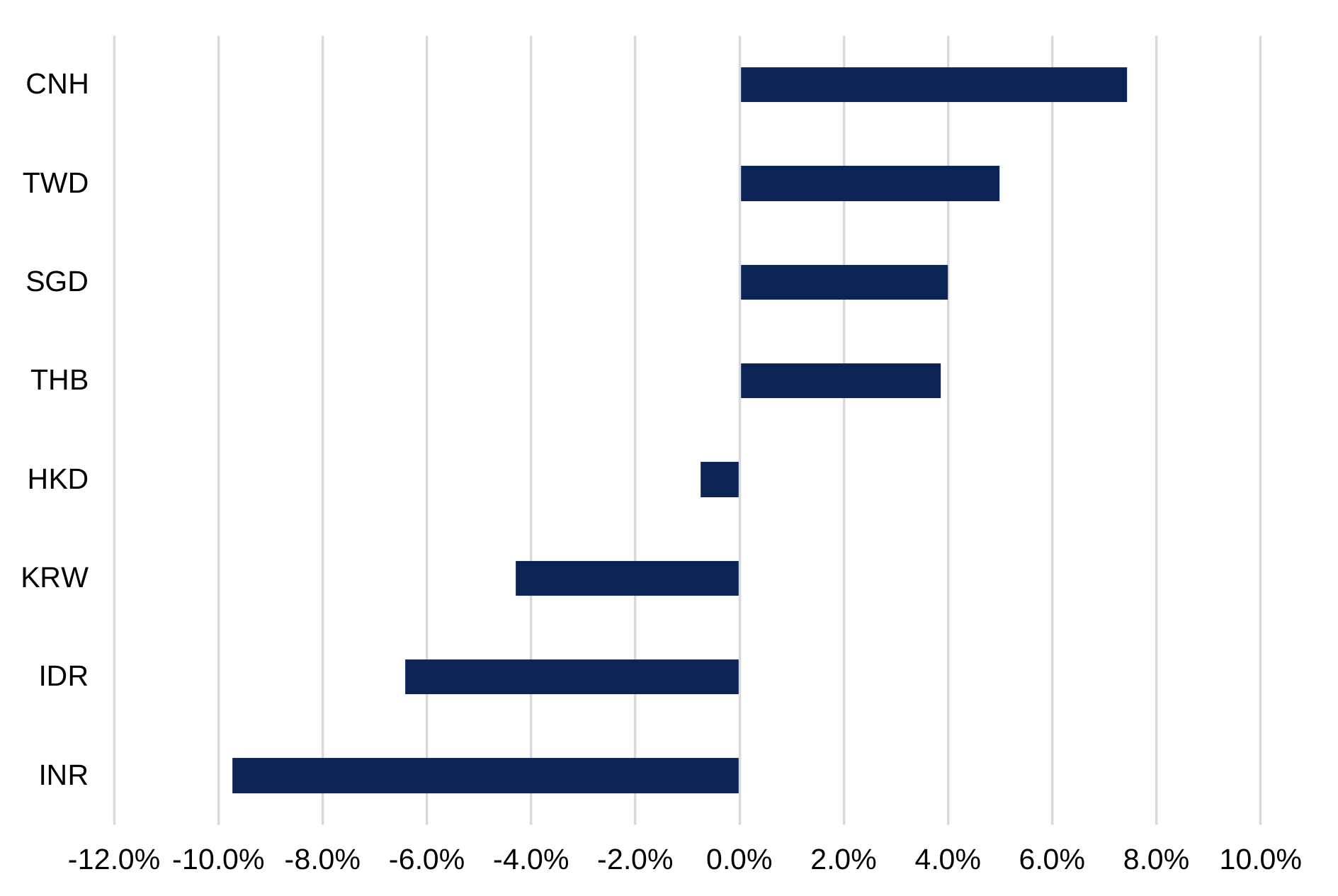
Source: FRED; % change against USD since 01/04/2025
The first leg of the recovery was supported by resilient exports, broad dollar weakness and a foreign exchange (FX) settlement story. China's trade surplus approached $1.2 trillion in 2025, while exporters that had previously held dollar earnings during the 2022–2025 yuan weakness began converting more proceeds back into renminbi. State Administration of Foreign Exchange (SAFE) data show Chinese banks bought around $766 billion of FX from clients in Q1 2026 while selling $628 billion, implying net FX settlement of nearly $140 billion, compared with a net outflow of $57.6 billion in Q1 2025.
More recently, however, the rally has become less a by product of dollar weakness and more a China-specific story. Chinese equities attracted renewed interest as concerns around the Iran conflict faded and investors refocused on domestic growth themes, artificial intelligence (AI), advanced manufacturing and technology exports. China was also viewed as relatively insulated from Middle Eastern energy disruption compared with several other Asian economies.
That shift is visible in market correlations. The 40-day correlation between the China Securities Index 300 (CSI 300) and the yuan has climbed to its highest level in three years, while the yuan's correlation with the dollar has weakened. The currency is increasingly responding to investor perceptions of China itself rather than simply tracking broader dollar moves.
CNH correlation with CSI 300 and the Dollar
Since March 2026, CNH has become more closely tied to the CSI 300, while the dollar’s influence has been fading.
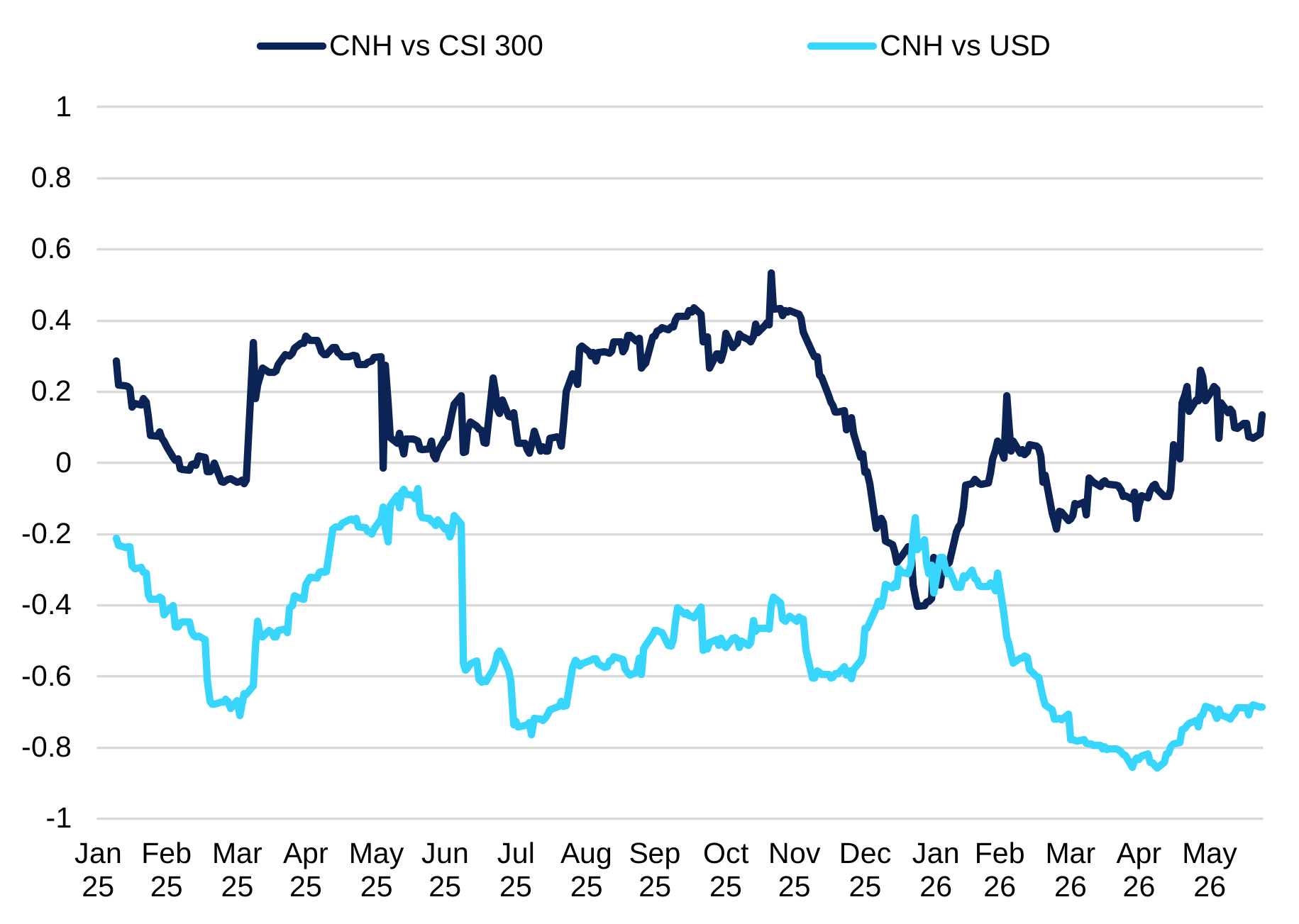
Source: FRED, CFETS, CSI
Portfolio flows have also broadened beyond equities, with Chinese government bonds benefiting from stabilising foreign demand after several years of outflows. At the same time, stronger demand for offshore yuan has pushed CNH funding costs in Hong Kong higher since the start of the Middle Eastern conflict, reinforcing a confidence loop: a firmer yuan reduces FX risk, supports foreign demand for Chinese assets and generates further demand for the currency.
Taken together, the drivers have evolved from a conventional dollar-driven rebound into a broader story of trade inflows, exporter conversion, portfolio demand and confidence in China's technology and manufacturing sectors.
Why This Yuan Appreciation is Different
China's changing export structure helps explain why policymakers have tolerated the move. Historically, Beijing was cautious about appreciation because much of the export sector competed on price and operated with thin margins. Today, customs data show semiconductors, computers and other technology related products accounting for roughly half of recent export growth, while traditional sectors such as clothing and furniture have been flat or declining.
China Exports by Product Type: March 2020
AI-related goods are taking a larger share of Chinese exports, pointing to the sector’s growing role in the export mix.
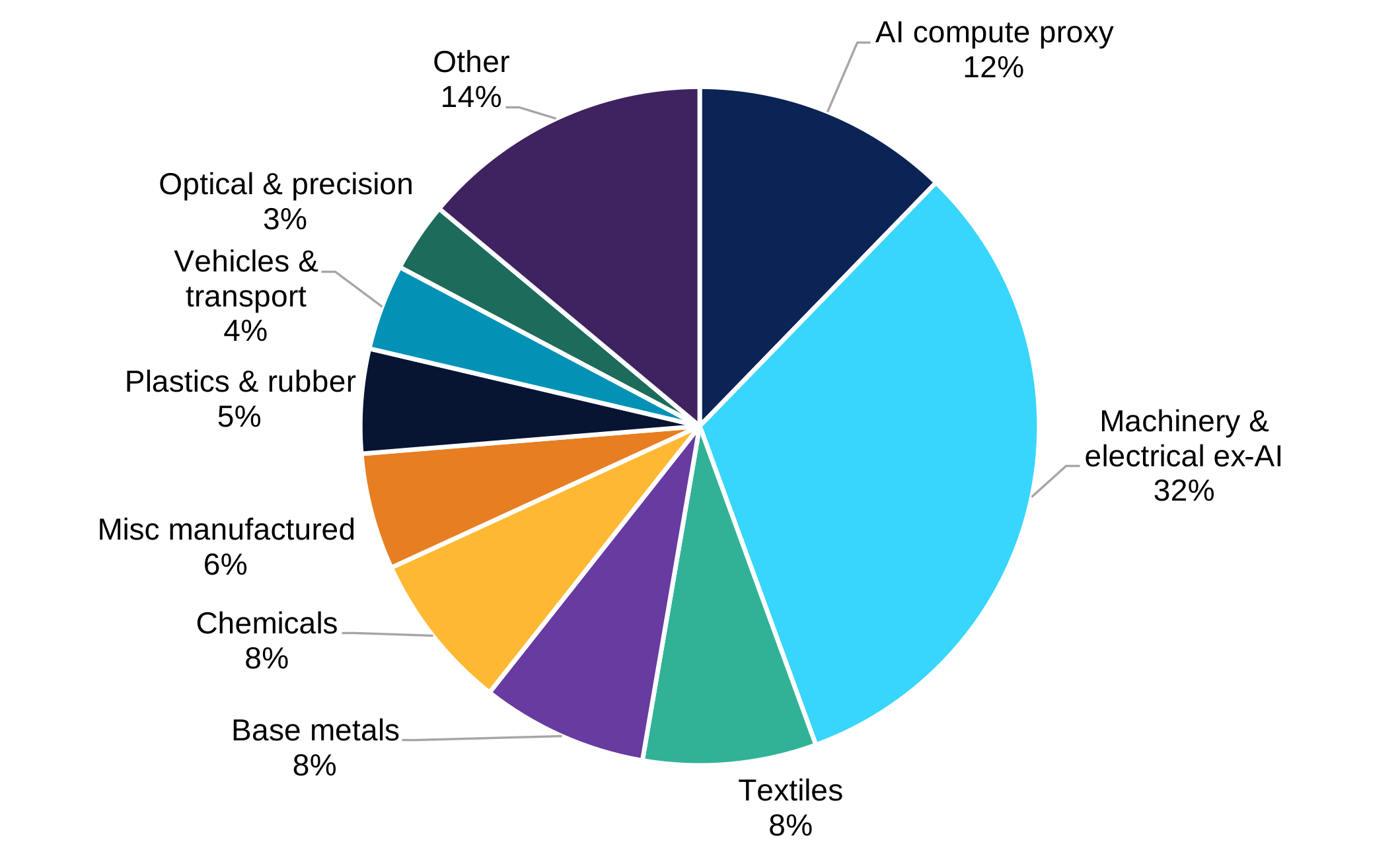
Source: GACC, Sucden Financial
China Exports by Product Type: MAY 2026
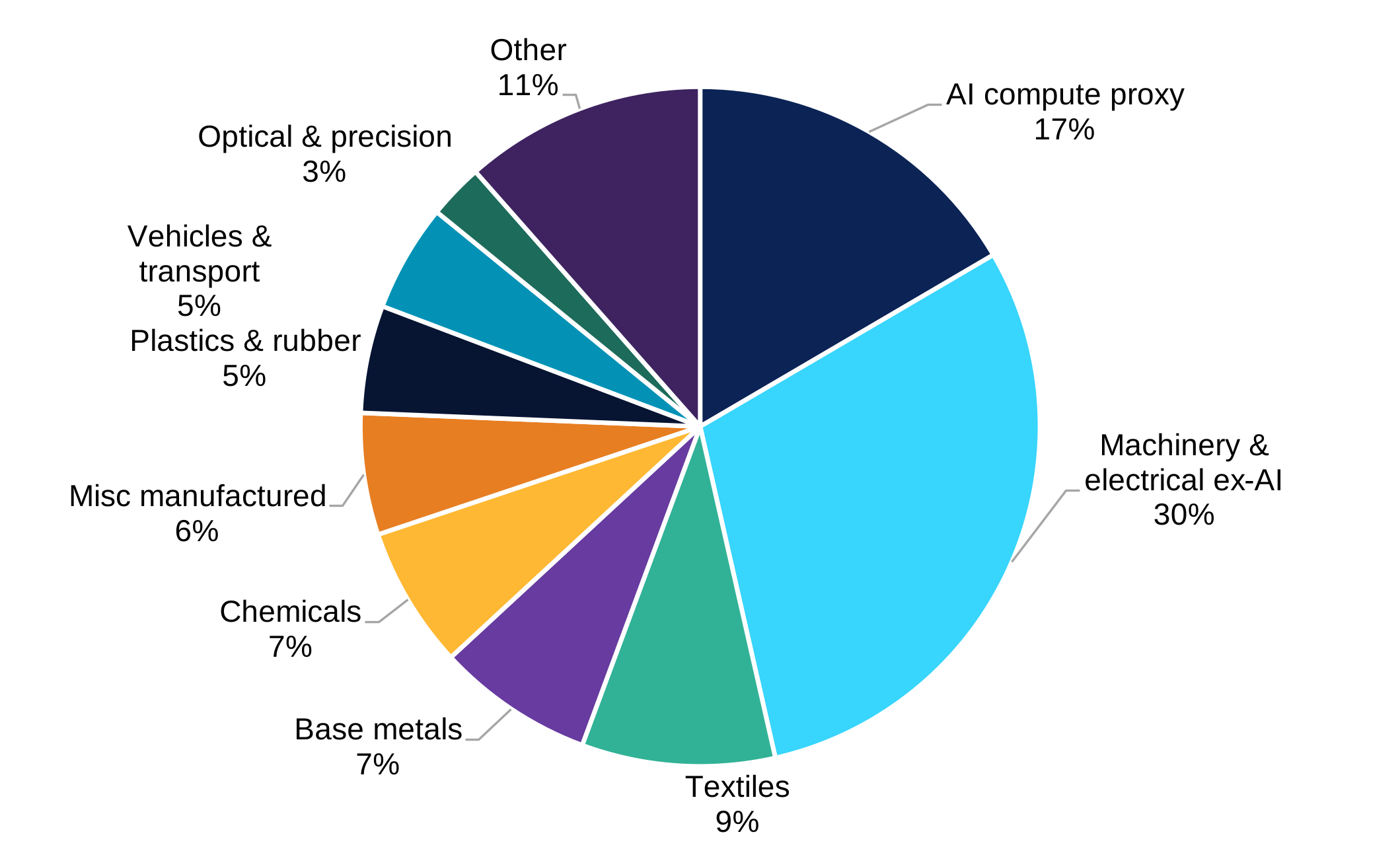
Source: GACC, Sucden Financial
In higher-value industries, competitiveness depends less on the exchange rate and more on technology, innovation and supply-chain depth. A stronger yuan also lowers the cost of imported energy, semiconductor equipment and advanced manufacturing inputs, helping contain imported inflation while supporting industrial upgrading. Policy signals have reinforced this view. Daily fixings have largely remained near their strongest levels in almost three years despite the currency's gains, suggesting authorities are managing the pace of appreciation rather than resisting it outright. The stronger yuan also fits a broader objective: increasing the renminbi's role in the global financial system.
The Path to Currency Internationalisation
China has become more vocal about renminbi internationalisation since 2025, presenting the current environment as an opportunity to strengthen the currency's standing while confidence in long-term dollar dominance is under greater scrutiny. The latest Five Year Plan reiterated support for this goal, with officials supporting the building of a "powerful currency".
Recent People’s Bank of China (PBOC) initiatives point in that direction. The central bank broadened the Foreign and International Monetary Authorities (FIMA) repo facility, allowing overseas central-bank-type institutions to obtain yuan liquidity by pledging Chinese government bonds, while outstanding use of PBOC swap lines rose to 111.6 billion yuan in Q1, the highest level in two years.
The push is also visible in trade settlement and funding markets. As more Chinese trade is settled in yuan, foreign banks, companies and trading partners need larger renminbi balances. Meanwhile, panda bond issuance has reached around RMB51.4 billion so far this year, the strongest start on record, turning what was once a niche market into a more meaningful funding channel.
Beijing's objective appears to be expanding the yuan's role at the margin, as a larger share of global trade, investment and reserve activity taking place in renminbi.
CNH Liquidity: From Stress to Stability
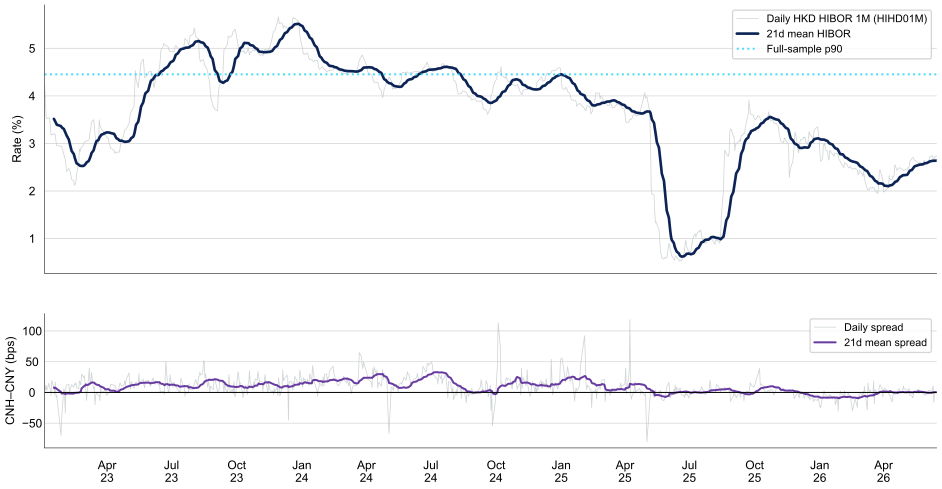
Three years ago, offshore yuan borrowing costs were higher and more prone to fluctuation. Funding rates in Hong Kong spiked above 5%, the gap between onshore and offshore prices widened, and anyone hedging or trading CNH had to account for the possibility of sudden liquidity constraints. Today the picture is calmer. Offshore funding costs have fallen back towards 2–3%, the onshore-offshore price gap is barely visible, and CNH volatility remains low by emerging-market standards.
Daily HIBOR and CNH-CNY spread
The 2023 offshore funding squeeze has given way to lower HIBOR and a near-zero CNH-CNY basis, pointing to more stable CNH liquidity today than at the 2023 peak.
Source: HKAB, CFETS, Sucden Financial
CNH liquidity matters because it determines whether offshore yuan is usable in practice, not just supported in theory. The recent rally has increased interest in yuan assets, but that demand only becomes durable if investors can fund positions, hedge exposure and move between CNH and CNY without facing sharp basis moves or sudden jumps in borrowing costs. This is where the offshore market looks different from 2022–23: funding conditions are calmer, the CNH-CNY gap is narrower, and volatility has remained contained. In other words, the yuan story is no longer only about appreciation; it is also about whether the offshore market has become deep enough to support broader use.
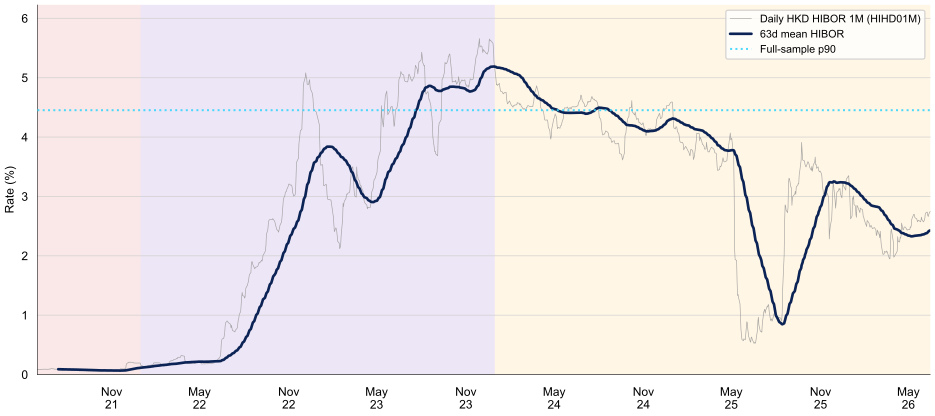
Smoothed offshore CNH funding cost, June 2021 to present
Offshore funding tightened sharply in 2022-23 as China defended the yuan against a strong dollar, then eased in 2024-26 while spot moves stayed contained.
Source: HKAB, Sucden Financial
Offshore Yuan Infrastructure
The 2022–23 experience prompted authorities to implement a series of structural measures which have aimed to give international investors more reliable access to yuan funding and collateral, supporting the currency's international use.
In January 2025, the Hong Kong Monetary Authority (HKMA) and PBOC announced measures to deepen financial cooperation. Northbound Bond Connect holdings were approved as collateral for offshore RMB repo transactions and for margin at OTC Clearing Hong Kong, while the HKMA expanded eligible collateral for its RMB Liquidity Facility to include onshore government and policy-bank bonds. The goal was straightforward: foreign holders of Chinese bonds should be able to borrow yuan against those bonds offshore, rather than being forced to sell assets when they need cash.
The infrastructure was strengthened further through the RMB Business Facility, launched in October 2025 and doubled to RMB200 billion in January 2026. Backed by the HKMA-PBOC currency swap line, the facility channels onshore yuan into Hong Kong's offshore market through repo and cross-currency swap transactions, giving banks a more stable source of RMB funding for corporate lending.
At the June 2026 Lujiazui Forum, PBOC announced a FIMA RMB Repo facility, allowing foreign central banks, sovereign wealth funds and similar institutions to obtain yuan liquidity from the PBOC by pledging Chinese government and high-grade bonds as collateral. This facility also outlined a pilot under which six major Chinese banks will conduct offshore yuan FX trading through CFETS in the Shanghai free-trade zone.
The market data suggest these efforts are beginning to matter. Average daily turnover involving the renminbi reached about $817 billion in April 2025, more than 55% above 2022 levels, lifting its share of global FX turnover to 8.5% and making it the fifth-most traded currency globally. Hong Kong's listed market also saw strong growth during the tariff-driven volatility of 2025, with renminbi futures volumes rising sharply and USD/CNH futures later recording record activity days as hedging demand climbed.
Although activity has moderated in 2026, the liquidity base has continued to deepen. Renminbi deposits in Hong Kong rose from RMB960 billion at the end of 2025 to about RMB1.08 trillion by April 2026, suggesting more yuan is being held offshore for treasury, financing, investment and settlement purposes. Investor access has broadened too, with CNH exposure increasingly available through multicurrency accounts, exchange traded products, funds and derivatives, while smaller contract sizes have made participation easier for private investors and smaller institutions.
Current pricing also points to calmer conditions. As of mid-June 2026, one-month HIBOR is 2.75%, below the 4.45% stress threshold and averaging around 2.5% since mid-2025. The CNH-CNY spread is just 1.3 basis points (bps), effectively flat, while one-month realised CNH volatility is around 2.3%. US dollar/onshore yuan (USDCNY) and US dollar/offshore yuan (USDCNH) both trade near 6.76, with less than 1bp between them, showing calmer funding and a tightly managed offshore onshore relationship.
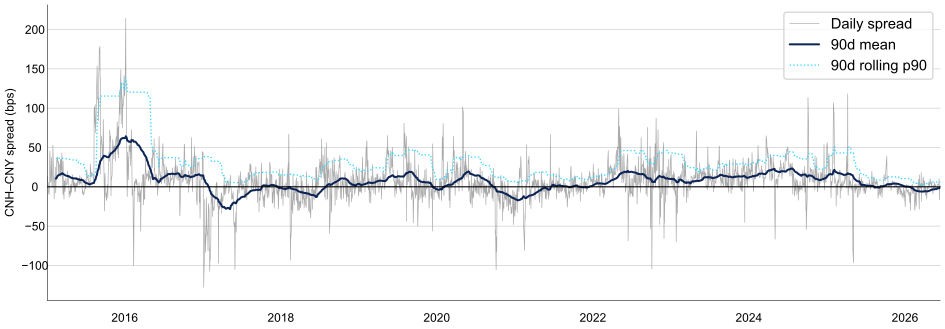
CNH-CNY spread with 90-day mean and rolling 90th percentile
Repeated widening of the CNH-CNY gap in 2015-16 and 2022-23 flagged offshore liquidity pressure, in contrast to the subdued basis seen recently.
Source: CFETS, Sucden Financial
Our View
We continue to see a directional bias towards gradual yuan appreciation. Exporter conversions, resilient technology exports, improving portfolio inflows and improving confidence in the Chinese economy should remain supportive. Chinese companies are also believed to hold substantial FX balances accumulated during the 2022–2025 period of yuan weakness, and further conversion could provide another source of demand if domestic confidence improves and the US-China rate differential narrows.
The risks remain substantial: renewed tariffs, weaker global demand, softer exports or renewed property stress could revive depreciation pressure. If appreciation becomes too rapid and begins to threaten employment or exporter profitability, policymakers are also unlikely to remain passive.
Ultimately, the recent appreciation matters because its drivers are changing. Trade flows, portfolio allocations, technology exports and investor sentiment are playing a larger role alongside policy management. Beijing is slowly creating the infrastructure for the yuan to play a bigger role in global trade and finance. Over time, that may be the more important story than the appreciation itself.
FX Access and CNH Hedging Support
Glossary
Yuan / renminbi (RMB): Renminbi is the official currency of China; yuan is the unit of account.
CNY / CNH: CNY is the onshore yuan traded in mainland China; CNH is the offshore yuan traded outside mainland China.
Panda bonds: Renminbi-denominated bonds issued in China by foreign issuers.
HIBOR: Hong Kong Interbank Offered Rate; effectively the interbank funding rate for Hong Kong dollar liquidity.
RMB repo: A renminbi repurchase agreement, where yuan liquidity is borrowed against collateral such as Chinese government bonds.
Source Abbreviations
• FRED: Federal Reserve Economic Data.
• GACC: General Administration of Customs of China.
• CFETS: China Foreign Exchange Trade System.
• CSI: China Securities Index.
• HKAB: Hong Kong Association of Banks.
• SAFE: State Administration of Foreign Exchange.
• PBOC: People’s Bank of China.
• FIMA: Foreign and International Monetary Authorities. • HKMA: Hong Kong Monetary Authority.

