


EUR / USD
EUR/USD remains under sustained downward pressure, and we see the primary driver as a widening macroeconomic divergence between the United States and the eurozone, amplified by elevated oil prices linked to Middle Eastern geopolitical tensions. Rising energy costs are compressing European growth expectations while simultaneously pushing eurozone inflation higher, creating a stagflationary dynamic that complicates the ECB’s policy response. By contrast, the United States benefits from its position as a net energy exporter, with we seeing the dollar continue to attract both safe-haven demand and energy-settlement flows.
From a technical perspective, EUR/USD has extended its downtrend to fresh one-month lows near 1.1491. The pair is trading well below all key dynamic levels, including the 200-day, 50-day and 20-day SMAs clustered around 1.17–1.18. The daily RSI has fallen to roughly 32, approaching oversold territory. We expect the 1.1490 level to act as an important near-term support zone. A decisive break below this area could accelerate the move towards the six-month low near 1.1400, particularly if upcoming inflation data and the March FOMC communication reinforce expectations that energy-driven price pressures will delay Federal Reserve easing beyond September.
USD / JPY
Source: Massive (polygon.io)
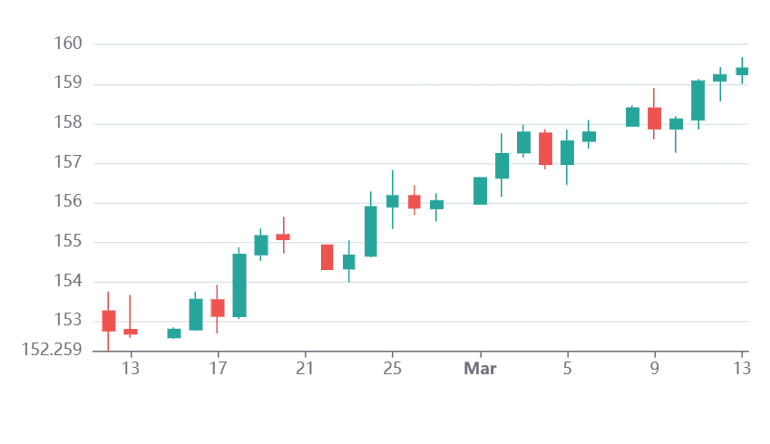
USD/JPY is increasingly shaped by the macro consequences of the escalating Middle East conflict, which is influencing the pair through several transmission channels. We see rising crude oil prices, driven by risks to the Strait of Hormuz shipping corridor, pushing Japan’s import costs higher and lifting inflation expectations beyond the Bank of Japan’s 2% target, with projections moving closer to 2.4% over the medium term. At the same time, the dollar continues to benefit from its status as the preferred safe-haven currency during periods of geopolitical stress.
Japanese policymakers face a challenging policy dilemma. Yen weakness raises imported inflation, yet attempts to support the currency through intervention face structural resistance from persistent dollar demand rooted in interest rate differentials. We expect the Bank of Japan to continue signalling gradual policy normalisation as labour markets tighten and wage growth remains robust, the strongest in more than three decades, while exchange rates play an increasingly important role in inflation dynamics.
Technically, USD/JPY is trading more than 650 pips above the 200-day SMA, with the RSI approaching overbought territory near 69. This reflects the strength of the underlying bullish momentum, although it also highlights vulnerability to corrective pullbacks if incoming data, particularly the upcoming inflation release or payroll figures, shifts expectations towards earlier Federal Reserve easing. For now, we see the broader bias remaining to the upside, with the all-time high near 162 emerging as the next meaningful target unless labour market data deteriorates sharply enough to force a shift in Fed policy expectations
GBP / USD
Source: Massive (polygon.io)
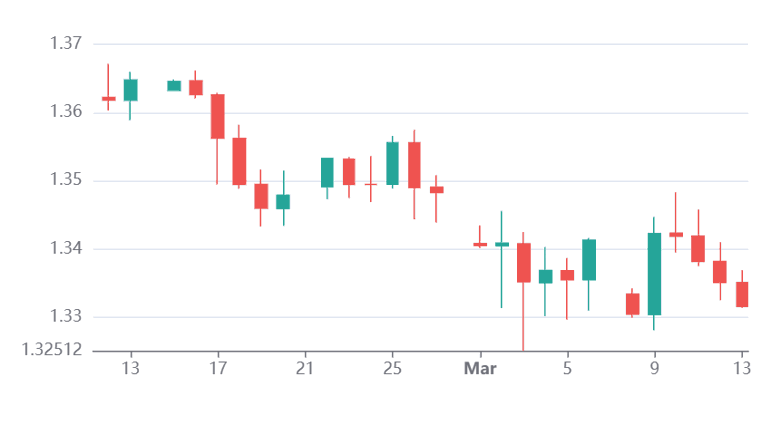
Sterling continues to face downward pressure, and we see the main driver as the structural divergence between the United Kingdom and the United States in the context of the ongoing Iran conflict and energy market disruption. Crude prices around $100 per barrel create asymmetric economic effects: the United States benefits as a net energy exporter, whereas the United Kingdom, as an energy importer, faces renewed inflationary pressures that constrain monetary policy flexibility.
We expect this dynamic to reinforce the divergence between central banks. The Federal Reserve retains greater scope to maintain restrictive rates, supported by domestic energy revenues and resilient demand, while the Bank of England faces stagflationary risks that make aggressive easing difficult to justify despite earlier expectations for rate cuts.
Market repricing of interest rate expectations has therefore been a key driver of sterling weakness. Federal Reserve rate-cut expectations have fallen sharply from roughly 66 basis points to around 30 basis points for 2026, while Bank of England easing expectations have been pushed further out from March–June to June–September. This widening transatlantic rate differential continues to channel capital towards higher-yielding dollar assets. The dollar has already strengthened more than 2% since late February, reaching fifteen-week highs near 99.70 and reinforcing its role as the dominant safe-haven currency.

