


EUR / USD
Source: Massive (polygon.io)
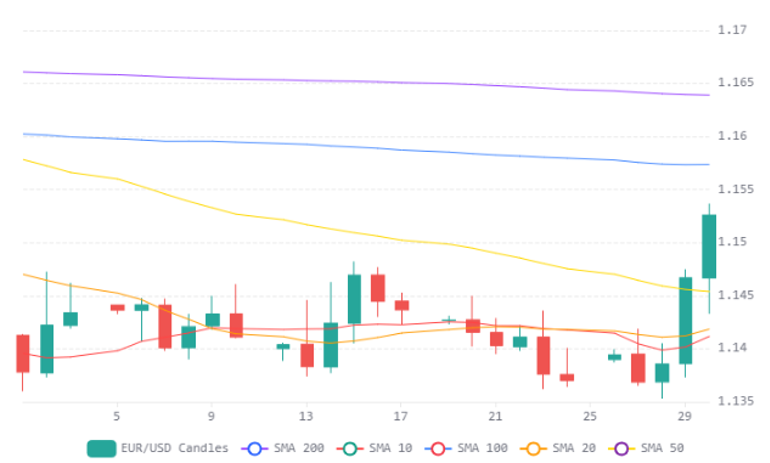
The EUR/USD pair is benefiting from a clear macroeconomic divergence between the Eurozone and the United States, with Eurozone Q2 GDP surprising to the upside at 0.4% quarter-over-quarter versus expectations of 0.2%, while U.S. Q2 GDP disappointed at just 1.5% annualized against a 2.1% consensus. This growth differential is compounded by policy divergence, as the ECB leans hawkish with markets pricing approximately 84% probability of a September rate hike, while the Fed remains on pause after a dovish hold at 3.50%-3.75% with no forward guidance on further tightening. Additional dollar headwinds from suspected Japanese intervention and a DXY break below 100 have created a multi-pronged tailwind for the euro.
From a technical perspective, the pair has rallied sharply from 1.1473 to 1.1527, breaking above the 50-day moving average at 1.1482 with elevated volume and an RSI reading of approximately 64, signalling renewed bullish momentum after a subdued July. The key challenge now lies at the 200-day moving average near 1.1600, which aligns with overhead resistance at 1.1617 and represents the next meaningful technical hurdle. A sustained hold above the 1.1500 level would confirm the breakout and set the stage for a test of that resistance zone, while a failure to maintain this level risks a retreat toward the 1.1400 level.
Risks to the bullish thesis include elevated geopolitical tensions related to the Iran conflict and rising oil prices that could reignite global inflation concerns, potentially forcing the Fed back toward tightening and reasserting dollar strength.
USD / JPY
Source: Massive (polygon.io)
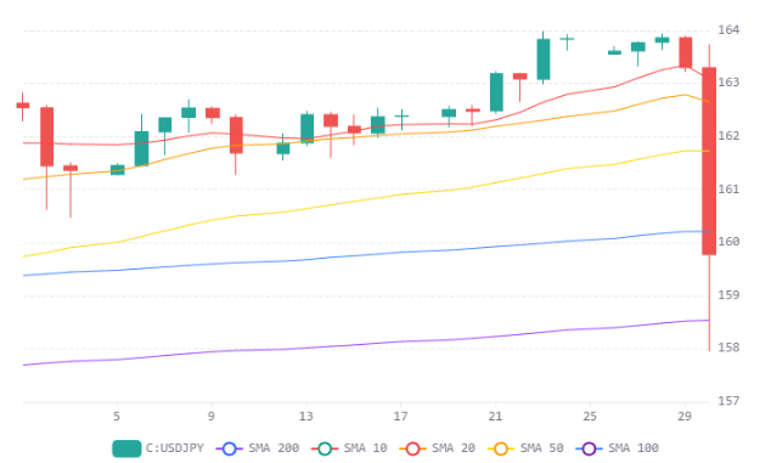
The USD/JPY pair experienced an extraordinary sell-off on Thursday, plunging from near 163.70-163.90 to a low of approximately 157.96 before partially recovering to close near 160, representing a 3.7% intraday range that dwarfs typical daily fluctuations. The speed and magnitude of the move strongly suggest intervention by Japan's Ministry of Finance, with the scale consistent with the record ¥11.73 trillion spent during the April-May intervention round earlier this year. The macroeconomic backdrop created an ideal window for authorities to act, as disappointing U.S. GDP growth of just 1.5% annualized versus 2.1% expected, combined with moderating PCE inflation, had already placed the dollar under pressure following a perceived dovish Fed hold.
From a technical perspective, the pair has sliced decisively below its 20-day moving average at 162.47, the 50-day moving average around 161.38 and the 100-day SMA at 160.08, with the daily RSI collapsing to approximately 30—signalling deeply oversold conditions. The heaviest volume concentrated around 159 during the sharpest phase of decline, while the partial recovery suggests buying interest emerged near the 200-day moving average at 157.98, which now represents the critical support level for near-term price action.
However, the fundamental challenge for sustained yen strength remains the wide 425-basis-point interest rate differential between U.S. rates at 5.25-5.50% and Japan's 1%, which continues to incentivize yen-funded carry trades. Whether this intervention marks a genuine inflection point or another temporary reprieve will depend on Friday's BOJ policy decision and forward guidance, as well as whether structural headwinds—including elevated energy costs, Japan's expansionary fiscal stance, and safe-haven dollar demand—can be overcome by a meaningful narrowing of the rate differential in coming months.
GBP / USD
Source: Massive (polygon.io)
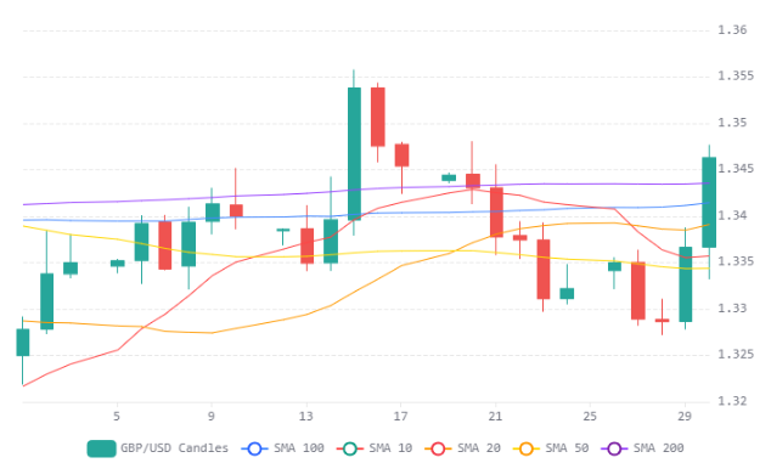
GBP/USD surged approximately 0.7% to 1.3464, driven by a confluence of hawkish Bank of England signals and broad US dollar weakness. The BoE's decision to hold rates at 3.75% was accompanied by a more hawkish-than-expected vote split, with three MPC members favouring a rate hike versus the two dissenters markets had anticipated, providing meaningful support for Sterling.
On the US side, disappointing GDP growth of just 1.5% against a 2.1% consensus forecast, combined with the Fed's lack of clear forward guidance, diminished the dollar's yield advantage and shifted relative interest rate expectations in favour of the pound. Suspected Japanese yen intervention further amplified the greenback's broad sell-off, providing an additional tailwind for the pair.
Technically, the rally pushed price decisively above the 200-day SMA at 1.34, while the daily RSI at 59 reflects strengthening bullish momentum without yet entering overbought territory. The bullish case targets the 1.3525 resistance level established in mid-July, while the cluster of moving averages near 1.3400 should serve as meaningful support on any pullback driven by profit-taking or a reassertion of dollar strength.


