


EUR / USD
Source: Massive (polygon.io)
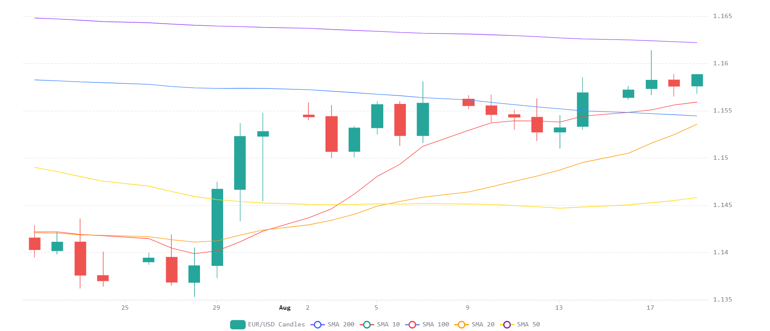
EUR/USD is consolidating around 1.1589 as competing monetary policy and geopolitical forces keep the pair close to the key 1.1600 resistance area. The relative policy outlook remains supportive for the euro, with expectations that the Fed will remain on hold through September contrasting with the prospect of further ECB tightening as eurozone inflation remains above target. We see this narrowing policy divergence continuing to provide underlying support for the single currency.
However, renewed tensions surrounding the Strait of Hormuz have restored some safe haven demand for the dollar. Brent crude above USD 91 per barrel and elevated European natural gas prices also present a more significant challenge for the energy dependent eurozone, potentially weighing on growth while sustaining inflationary pressures. The broader bond selloff, with US and German long term yields reaching multi year highs, further highlights concerns that inflation could remain persistent and keep financial conditions restrictive.
Technically, EUR/USD remains just below the 200 day SMA around 1.1600, while the 20 day and 50 day SMAs near 1.1500 provide an important support base. The daily RSI around 64 indicates moderately positive momentum without suggesting excessively stretched conditions. We see a decisive break above 1.1606 opening the way towards 1.1650 and potentially 1.1700, while another rejection around the 200 day SMA could trigger a pullback towards 1.1500. For now, we expect the pair to remain sensitive to the tension between improving relative rate expectations and renewed geopolitical demand for the dollar.
USD / JPY
Source: Massive (polygon.io)
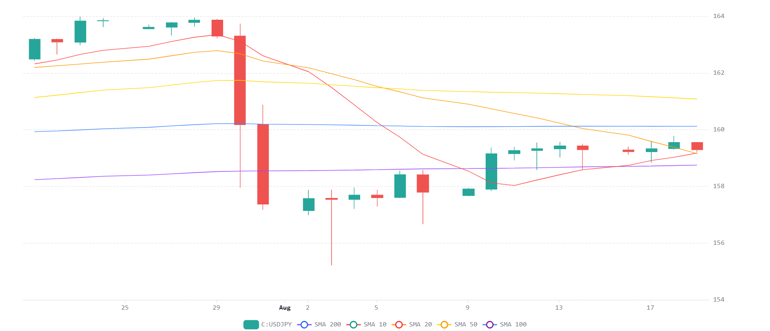
USD/JPY is trading around 159.30 as shifting monetary policy expectations increasingly challenge the interest rate differential that has supported the pair. Markets continue to price a high probability of another BoJ rate increase, while Japanese government bond yields have risen towards multi decade highs. Higher domestic yields are also making Japanese assets increasingly attractive relative to overseas alternatives, potentially encouraging some repatriation of capital and providing additional support for the yen.
Technically, the pair remains below the 50 day SMA near 161.08 and the 30 day VWAP around 160.34, maintaining a bearish intermediate term structure. Price is holding close to the 20 day SMA around 159.15, while the 200 day SMA near 158.75 represents the more significant downside support. We see the 158.75 to 159.15 region as particularly important, with a sustained break below this area likely to reinforce downside momentum.
Elevated US Treasury yields and renewed geopolitical uncertainty continue to provide some support for the dollar, limiting the pace of yen appreciation. Nevertheless, the prospect of further BoJ tightening and a gradual narrowing of the US Japan rate differential suggest the balance of risks is shifting lower for USD/JPY. We expect a break beneath the 200 day SMA to increase the risk of a deeper correction, while a recovery above 160.34 would be required to improve the near term technical picture.
GBP / USD
Source: Massive (polygon.io)
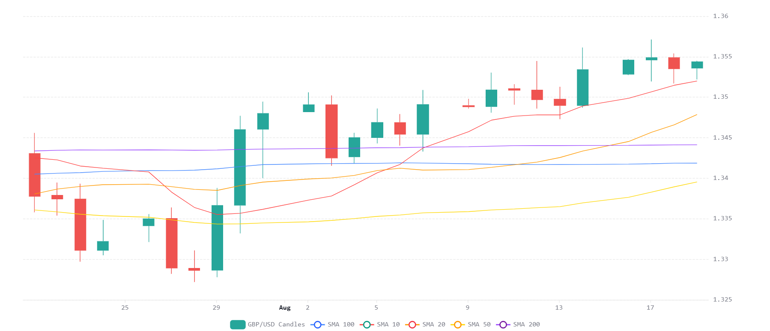
GBP/USD remains firm around 1.3544, trading comfortably above its key moving averages as the recovery from late July continues. The fundamental backdrop remains relatively supportive for sterling, with softer US employment, inflation and retail sales data reducing expectations of another Fed rate increase, while markets continue to price some additional BoE tightening before year end. We see this relative policy outlook as an important source of support for the pair.
The UK labour market is less convincing, however. Unemployment remains elevated at 4.9%, while private sector wage growth has moderated, suggesting underlying labour market conditions are gradually cooling. At the same time, Brent crude above USD 91 per barrel creates renewed inflation risks for the UK, potentially complicating the BoE outlook by maintaining price pressures even as domestic activity softens.
Technically, GBP/USD remains above the 20 day, 50 day and 200 day SMAs, with the daily RSI around 62 confirming positive momentum without reaching overbought territory. Resistance around 1.3563 remains the immediate hurdle. We see a sustained break above this level strengthening the bullish structure and opening the way towards higher resistance levels, while another rejection could encourage a pullback towards the 20 day SMA around 1.3500. This week’s UK inflation data and FOMC minutes should provide greater clarity on whether the current policy divergence can sustain sterling’s advance.


