


EUR / USD
Source: Massive (polygon.io)
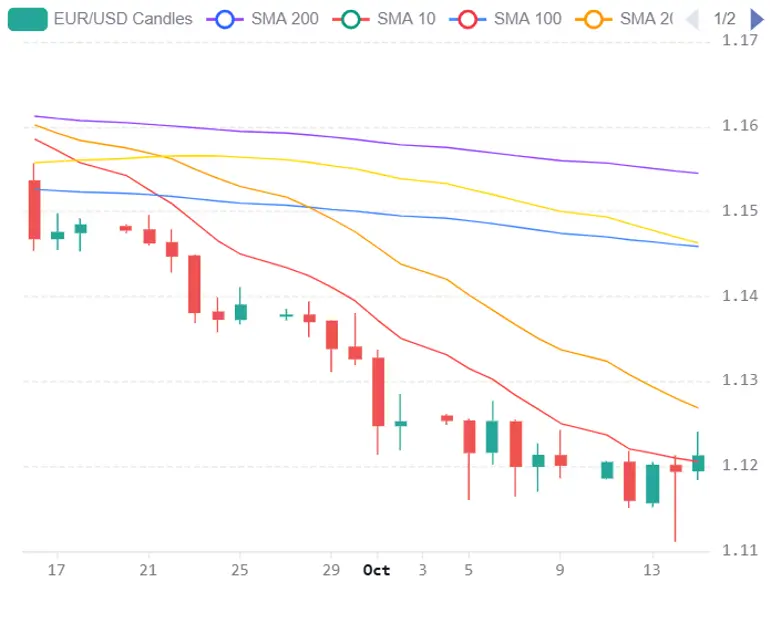
EUR/USD has recovered modestly to around 1.1212 from its recent low near 1.1149, although the broader downward trend remains intact. The recovery has largely reflected short covering rather than sustained buying interest, with gains fading during the European and US sessions. The dollar continues to benefit from a substantial interest rate advantage, while stronger US inflation data, including September CPI at 3.7% and a sharp increase in producer prices, have reinforced concerns over persistent price pressures. However, dovish commentary from Fed officials has reduced expectations of another October increase, with markets now assigning around a 73% probability to unchanged rates.
The European backdrop remains challenging, with France’s deteriorating fiscal position and weaker industrial activity adding to the euro’s vulnerability. Elevated French sovereign yields and public debt approaching 119% of GDP have increased concerns over fiscal sustainability, while persistent energy pressures continue to constrain eurozone growth. We see these structural weaknesses limiting the euro’s ability to benefit from the recent moderation in US yields, particularly while the Fed maintains a substantial policy rate advantage over the ECB.
Technically, EUR/USD remains below the 20 day SMA and 30 day VWAP around 1.1300, as well as the 50 day and 200 day SMAs clustered near 1.1500. The daily RSI around 33 indicates that conditions remain oversold, although selling pressure appears to be moderating. We see scope for a corrective recovery towards 1.1300 if the pair can sustain trading above 1.1200. Conversely, failure to defend this level could expose the recent support around 1.1115, with the broader outlook remaining bearish until EUR/USD reclaims its major moving averages.
USD / JPY
Source: Massive (polygon.io)
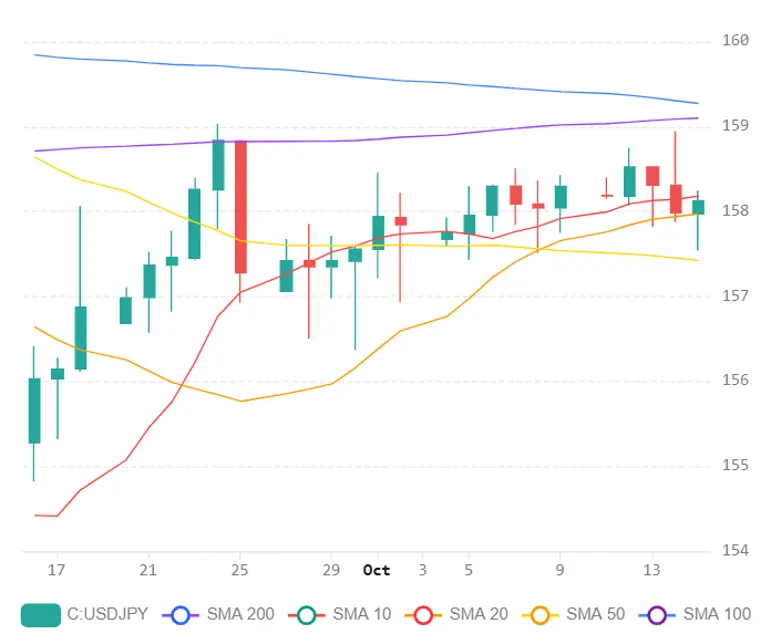
USD/JPY is consolidating around 158.12 as declining US Treasury yields and expectations of further Japanese monetary tightening increasingly challenge the dollar’s recent strength. The US 10 year yield has retreated towards 5.05%, narrowing the yield differential that has supported USD/JPY over recent months. Meanwhile, hawkish commentary from BoJ officials and renewed intervention warnings from Japanese authorities have reinforced expectations that further yen depreciation may encounter increasing resistance.
However, the fundamental outlook remains finely balanced. September US CPI accelerated to 3.7%, while producer price inflation reached 6.3% annually, sustaining concerns over underlying inflationary pressures. Although Fed officials have indicated a preference for holding rates unchanged in October, the possibility of further tightening remains an important source of dollar support. We see the combination of softer US yields and expectations of further BoJ policy normalisation as gradually improving the outlook for the yen, although elevated US inflation continues to limit the scope for a sustained USD/JPY decline.
Technically, USD/JPY remains confined between the 50 day SMA near 157.43 and the 200 day SMA around 159.00, with the 30 day VWAP providing additional support around 157.28. The daily RSI near 54 reflects broadly neutral momentum, while the recovery from 157.55 suggests buying interest remains present on dips. We expect a sustained break below 157.28 to weaken the technical structure and encourage further yen appreciation, while a move above 159.00 would restore upward momentum. Fed Chair Warsh’s upcoming remarks and the BoJ’s October policy decision should provide important catalysts for determining the next directional move.
GBP / USD
Source: Massive (polygon.io)
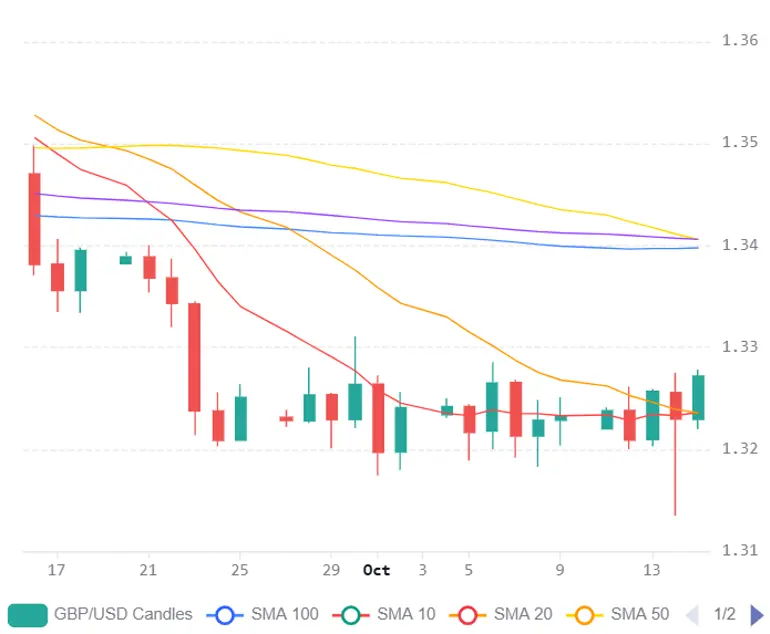
GBP/USD has recovered approximately 0.7% to around 1.3273 from its recent low near 1.3150, supported by declining US Treasury yields and reduced expectations of further Fed tightening in October. The US 10 year yield has retreated from around 5.26% towards 5.09%, while markets now assign only a 27% probability to another rate increase at the upcoming meeting. This shift has provided sterling with some relief from the dollar strength that dominated earlier sessions.
The UK economic backdrop has also improved, with August GDP expanding by 0.1% against expectations of a contraction, while manufacturing output rose by 1.2% month on month. These figures have strengthened expectations of further BoE tightening, with markets anticipating at least one additional increase before year end. However, elevated energy prices and uncertainty ahead of the UK budget remain important risks. We see the combination of improving domestic activity and a less hawkish Fed outlook as supportive for sterling in the near term, although fiscal concerns and persistent inflation could limit the sustainability of the recovery.
Technically, GBP/USD has reclaimed the 20 day SMA around 1.3200, while the daily RSI has recovered towards 48, indicating a notable improvement in momentum. However, the pair remains below the 30 day VWAP around 1.3300 and the 50 day and 200 day SMAs clustered near 1.3400. We expect a sustained break above 1.3300 to strengthen the recovery and potentially expose 1.3330, followed by the broader resistance region around 1.3400. Conversely, rejection from current levels could return attention towards 1.3200, with deeper support around 1.3150.

