EUR / USD
Source: Massive (polygon.io)
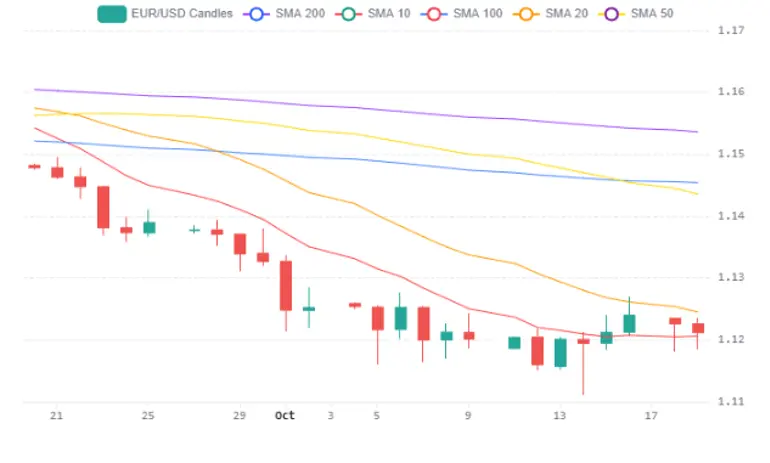
The EUR/USD pair fell approximately 0.24% on Monday to settle near 1.1212, pressured by a convergence of European political risk, rising energy costs, and a hawkish Federal Reserve backdrop. The dominant catalyst was the escalation of social unrest in France, where widespread riots triggered a surge in French 10-year bond yields to nearly 4.95% and widened the OAT-Bund spread to approximately 147 basis points — levels reminiscent of the 2011-2012 European debt crisis. With a Moody's credit review of France's sovereign rating scheduled for Friday and the potential for Marine Le Pen's National Rally party to capitalize on the disorder, political risk continues to hang heavily over the euro.
Compounding the single currency's difficulties, European natural gas prices climbed to a 3.75-year high while crude oil surged more than 2%, disproportionately burdening the energy-importing eurozone economy and stoking inflation fears that the German Bundesbank acknowledged are "clearly tilted to the upside." On the dollar side, markets are pricing an 83-84% probability of a Fed hold at the October meeting with December hike expectations near 90-92%, while the US 10-year yield pushed above 5.14%, reinforcing the greenback's yield advantage.
From a technical perspective, EUR/USD remains firmly below all key moving averages — the 200-day near 1.1580, the 50-day at 1.1450, and the 20-day at 1.1260 — confirming a pronounced bearish structural alignment throughout the multi-month decline from January highs above 1.2040. The daily RSI has recovered to approximately 36 from deeply oversold readings below 25, suggesting selling momentum is moderating, though this may represent merely a consolidation pause rather than a reversal. A breakdown below the critical 1.1116 support — the lowest print in over a year — would open the door to an accelerated move toward 1.1050, while the macro balance of risks remains tilted to the downside unless French political tensions de-escalate or US rate expectations shift materially.
USD / JPY
Source: Massive (polygon.io)
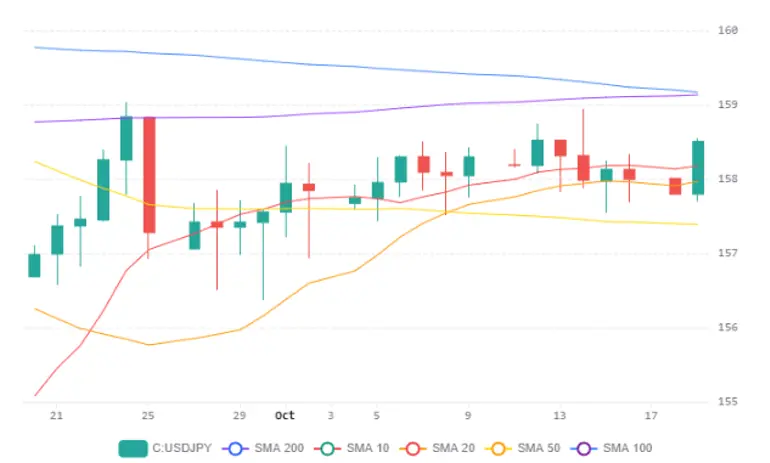
USD/JPY continues to grind higher, currently trading around 158.51 and comfortably above its 20-day and 50-day simple moving averages, though the pair remains capped below the critical 200-day SMA near 158.57—a level whose breach would open the door toward the psychologically significant 159 handle. The daily RSI at approximately 58 reflects building but not yet overextended bullish momentum following the rally from the early-September low near 153.10, suggesting the pair still has room to push higher before encountering overbought conditions.
The fundamental backdrop continues to favour dollar strength against the yen, anchored by the persistent interest-rate differential between the US and Japan. While the Federal Reserve is expected to hold rates steady at its upcoming meeting, market expectations for a December hike remain elevated at around 91%, whereas the Bank of Japan is seen as overwhelmingly likely to stand pat at its October 30 meeting despite Governor Ueda's signals that inflation is approaching the 2% target. This wide rate gap sustains carry trade flows that structurally weigh on the yen.
Adding to yen headwinds, Japan's heavy reliance on energy imports—over 90% of its supply—means crude oil's recent surge to multi-week highs deteriorates the country's terms of trade and pressures the currency, while Prime Minister Takaichi's expansionary fiscal plans raise concerns about debt sustainability that could complicate the BOJ's gradualist approach. However, competing forces bear watching: pockets of US economic vulnerability, such as the NAHB housing index dropping to a 14-year low, could temper Fed tightening expectations and narrow the rate differential if the data deterioration broadens. Near-term direction will likely hinge on whether the pair can decisively clear the 200-day SMA at 159, with US Treasury yields, equity market stability, and oil price developments serving as the primary catalysts for the next meaningful move.
GBP / USD
Source: Massive (polygon.io)
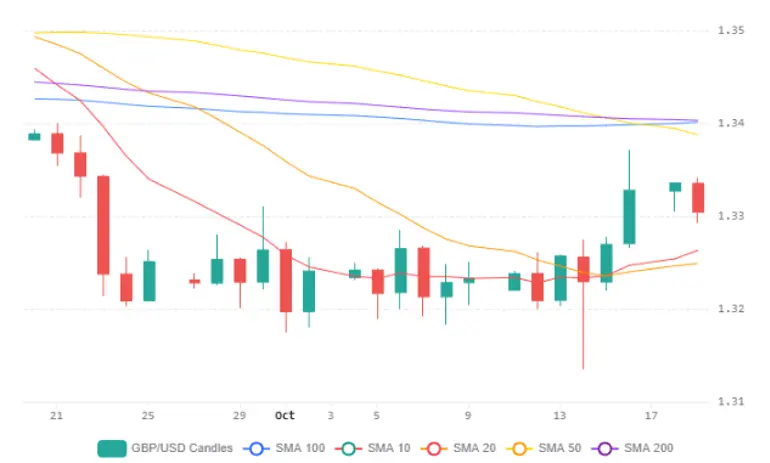
GBP/USD is consolidating in a tight range near 1.3300, sitting below the converged 50-day and 200-day SMAs clustered around 1.3400, which represent significant overhead resistance, while the 20-day SMA near 1.3250 provides near-term support. The daily RSI's recovery to approximately 51 from sub-40 readings earlier in the month signals improving momentum following the mid-October bounce off 1.3150, though the pair must decisively clear the 1.3400 zone to confirm a broader trend reversal.
The fundamental backdrop hinges on a pivotal week of UK inflation data, with CPI expected to rise to 3.4% from 3.1%, which could bolster the case for the Bank of England's first rate hike since August 2023 — a move Governor Bailey has implicitly supported by signalling frustration with persistently elevated inflation. Meanwhile, the Fed is widely expected to hold rates steady at its upcoming meeting with an 84% probability, though a December hike remains priced at roughly 90%, keeping the dollar underpinned by a hawkish medium-term outlook even as near-term tightening expectations have receded.
CFTC positioning data reveals non-commercial traders are net short sterling by approximately 107,000 contracts — the largest bearish bet in nine years — creating asymmetric risk to the upside should UK data surprise higher or the BoE strike a more decisively hawkish tone. Additional event risk from the UK Autumn Budget on October 28, combined with the unusual dynamic of AI-driven equity volatility feeding into Fed rate expectations, means that a resolution of this 1.3200–1.3400 range is likely imminent and could be sharp in either direction.
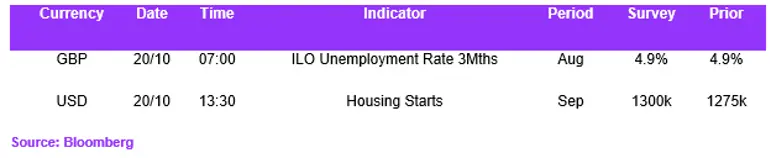
Economic Calendar