EUR / USD
Source: Massive (polygon.io)
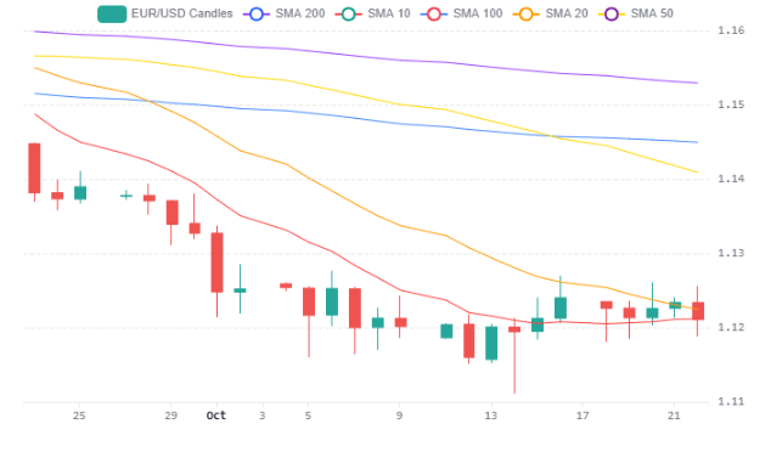
The EUR/USD pair is caught between competing macro forces, with the euro demonstrating surprising resilience despite significant fiscal stress within the eurozone. France's 10-year borrowing cost has breached 5 percent for the first time since 2002, and the Franco-German spread has widened to a 15-year high of approximately 175 basis points amid political deadlock and a looming Moody's credit review — a dynamic that historically weighs heavily on the single currency. However, broad-based dollar softness, driven by a sharp 20-basis-point plunge in the U.S. 10-year Treasury yield following a severe tech-sector selloff, has provided a counterbalancing support for the pair.
From a technical standpoint, EUR/USD traded within a narrow 0.61% range over the past session, closing near 1.1214 and sitting firmly below the 200-day SMA at 1.15, the 50-day SMA at 1.14, and the 30-day VWAP at 1.13, reinforcing the broader downtrend that has shed roughly 5.7% over six months. The daily RSI has recovered to approximately 38 from deeply oversold readings below 27, suggesting selling momentum is fading even as the bearish trend persists, with the 20-day SMA near 1.1235 now acting as a near-term pivot.
The pair's trajectory will likely hinge on the interplay between diverging rate expectations and fiscal narratives on both sides of the Atlantic. U.S. inflation remains elevated at 3.7 percent, with core pressures broadening on surging oil prices above $110 per barrel, yet markets have largely priced out a near-term Fed hike while eurozone consumer confidence has deteriorated further to minus 17.9. A bullish resolution requires holding above the 1.1116 swing low and reclaiming 1.1273 resistance, while a bearish break below 1.1189 would reopen the path toward October lows, with the upcoming Fed and ECB meetings serving as critical catalysts for directional resolution.
USD / JPY
Source: Massive (polygon.io)
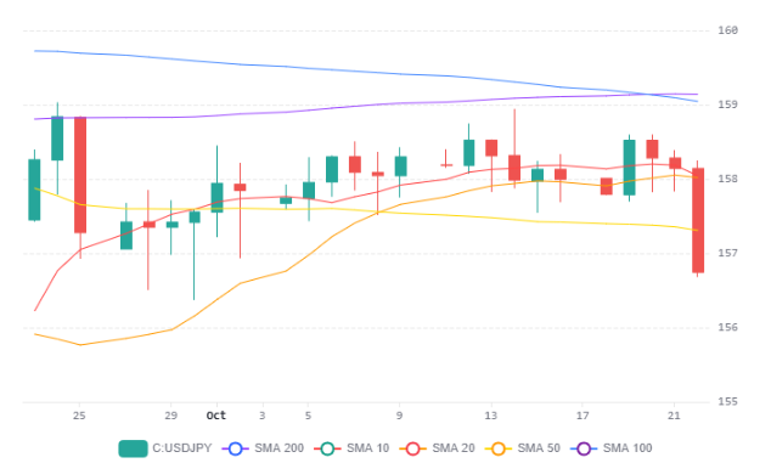
The USD/JPY pair is undergoing a significant bearish shift, declining approximately 0.84% from 158.08 to 156.78, with the move driven by a convergence of risk aversion, narrowing US-Japan interest rate differentials, and safe-haven demand for the yen. The sharp drop in US 10-year Treasury yields has compressed the rate spread that has underpinned dollar-yen strength for much of 2026, while the probability of a Fed rate hike at the upcoming October meeting has collapsed to just 7%, reflecting deteriorating growth expectations despite elevated oil prices.
On the Japanese side, the Bank of Japan's increasingly hawkish posture is reinforcing yen strength, with nearly 70% of economists expecting a rate hike from 1.25% to 1.50% in December and terminal rate projections reaching 2.0% or higher by mid-2027. Repatriation flows from Japanese investors unwinding overseas positions amid the global equity sell-off are adding further demand for the yen, amplifying the fundamental pressures on the pair.
From a technical perspective, the pair now trades decisively below all key moving averages — the 20-day SMA at 157.90, the 50-day SMA at 157.57, the 30-day VWAP at 158, and the 200-day SMA at 158.55 — while the daily RSI has dropped to approximately 40, confirming strong bearish momentum. A bearish continuation through the 156.70 support level could open the path toward deeper structural support near 155, particularly if selling pressure intensifies. The upcoming convergence of Fed, ECB, and BOJ policy meetings next week will be the critical catalyst in determining whether this move represents a durable trend reversal or a temporary correction within the broader carry-trade framework. For today, however, we expect a modest rebound after yesterday’s sharp sell-off.
GBP / USD
Source: Massive (polygon.io)
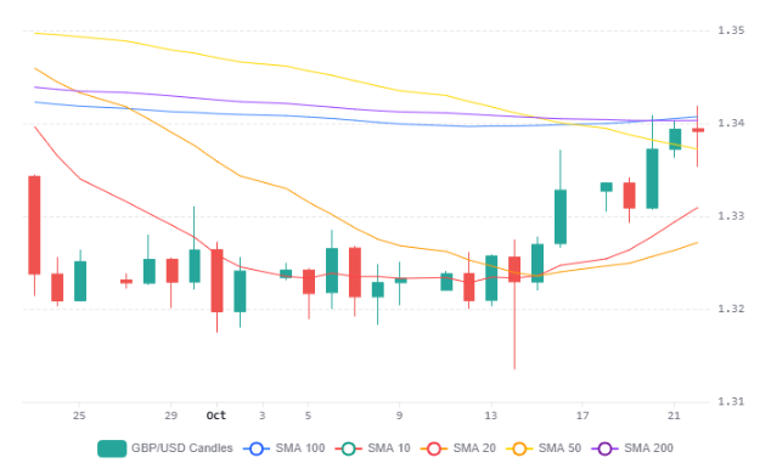
The pound's recent strength against the dollar is rooted in a meaningful divergence in central bank rate expectations, with UK inflation surprising to the upside at 3.5% and money markets now pricing a near-certain BoE rate hike in November alongside at least three further increases by April 2027, while the Federal Reserve is expected to hold rates steady at its late-October meeting. This widening interest-rate differential has made sterling an attractive carry-trade destination, a dynamic reinforced by a flight-to-safety rally in US Treasuries that has pulled the 10-year yield below 5 percent and taken broad-dollar strength off the table.
From a technical perspective, GBP/USD is consolidating around the critical confluence of the 200-day and 50-day simple moving averages near 1.3400, with the daily RSI at 60 reflecting a meaningful recovery from the mid-October low around 1.3150. The pair tested resistance at 1.3407 twice without a clean break, suggesting that a sustained move above this level could open the path toward 1.3600, while failure would likely trigger a pullback toward the 1.33 support zone anchored by the 20-day SMA and 30-day VWAP.
Event risk looms large in the near term, with the UK budget on October 28 and the Federal Reserve meeting falling in the same week, though institutional consensus does not currently expect the fiscal statement to materially unsettle markets. Elevated Brent crude above 110 dollars a barrel adds a layer of complexity, simultaneously reinforcing UK inflationary pressures that support the hawkish BoE repricing while threatening to compress real household incomes and complicate the tightening outlook.
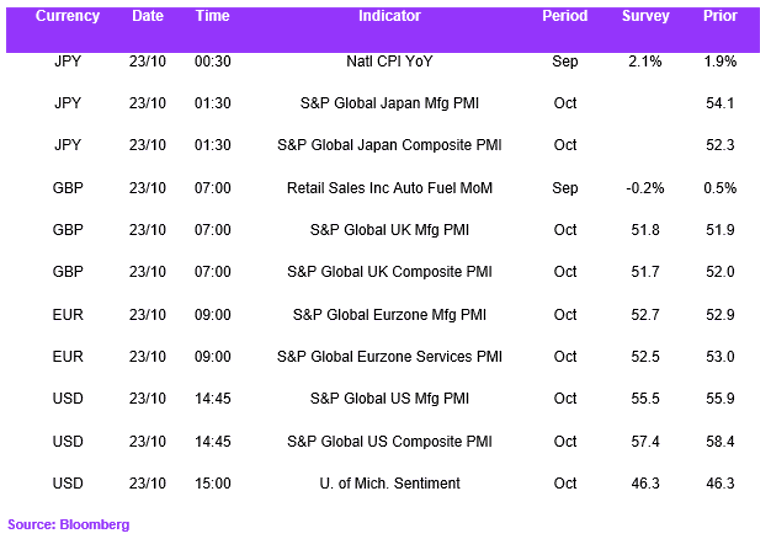
Economic Calendar