EUR / USD
EUR/USD continues to demonstrate resilience despite recent downward pressure, with the currency maintaining positions above critical technical levels, including the 20-day moving average at 1.16. The euro has shown remarkable strength against the dollar this year, gaining approximately 13%, primarily driven by broad dollar weakness and concerns over rising US debt levels.
The Federal Reserve's June meeting minutes revealed internal divisions regarding rate cut timing, while in Europe, German inflation has moderated to the ECB's target of 2.0%, though services inflation remains elevated. Technical analysis suggests a potential bullish scenario if buyers can defend above 1.18, although a break below 1.167 could trigger a deeper correction toward 1.135. Institutional investors maintain significant bullish sentiment, though near-term uncertainty persists as markets await clarity on US-EU trade negotiations. We expect the pair to remain resilient in the near term.
USD / JPY
USD/JPY continues to face moderate upward pressure due to the substantial interest rate differential between the US and Japan, with the Federal Reserve maintaining higher rates while the Bank of Japan pursues gradual policy normalisation. Recent Japanese economic data, particularly the slowdown in PPI to 2.9%, suggests diminishing inflationary pressures that could delay further BOJ rate hikes beyond their January adjustment.
Technical analysis indicates a mixed outlook, with the pair trading above key short-term moving averages but below the significant 200-day moving average at 149.30, suggesting potential resistance ahead. The upcoming Japanese upper house election has introduced uncertainty into the market, with proposed fiscal stimulus measures raising concerns about potential yen weakness.
Strong US economic indicators, particularly the jobless claims falling to an 8-week low of 227,000, continue to support the dollar through hawkish Fed policy expectations. The implementation of new US tariffs has created additional headwinds for the Japanese economy while paradoxically supporting dollar strength, further contributing to the currency pair's upward bias.
GBP / USD
GBP/USD faces growing downward pressure as the Bank of England adopts a more dovish stance amid weakening labour market conditions, creating a notable policy divergence with the Federal Reserve's approach. This fundamental imbalance is further amplified by widening interest rate differentials that currently favour the US Dollar, while the UK grapples with additional challenges from fiscal policy uncertainty and ongoing trade tensions.
Recent price action shows the pair declining from 1.36 to 1.358, with technical indicators suggesting weakening momentum as the RSI dips below 50. The pair maintains critical support at the 50-day SMA of 1.35 and the 200-day SMA at 1.29, though the 20-day SMA at 1.36 has emerged as immediate resistance.
Given the combination of deteriorating UK economic fundamentals, monetary policy divergence, and technical weakness, GBP/USD appears positioned for continued downside pressure in the medium term, with potential support levels at 1.347 and 1.329 likely to be tested.
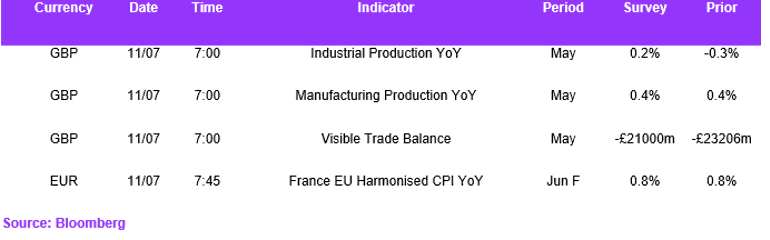
Economic Calendar