EUR / USD
The macroeconomic landscape presents significant challenges for the EUR/USD currency pair amid escalating trade tensions and shifting monetary policy expectations. Recent statements from Fed Governor Christopher Waller supporting a July rate cut have introduced new dynamics into the currency markets, although the markets do no seem convinced that this will take place. Meanwhile, President Trump's announcement of widespread tariffs targeting over 150 countries has heightened global trade uncertainties.
At the same time, the dollar's recent technical recovery appears temporary, with analysts expecting limited upside potential due to persistent US economic uncertainties and inflation concerns. European economic indicators remain mixed, with construction output showing weakness while markets closely monitor the ECB's monetary policy stance.
The diverging policy paths between the Federal Reserve and the ECB, combined with Trump's aggressive trade policies, are creating a complex environment for the EUR/USD pair. Market participants are particularly focused on the August 1st deadline for new US tariffs, which could significantly impact currency movements. The evolving political dynamics and monetary policy expectations suggest that the EUR/USD pair will remain elevated in the near term.
USD / JPY
The yen remains vulnerable to widening interest rate differentials as the Bank of Japan maintains its ultra-loose monetary policy stance. Recent verbal interventions from Japanese officials have provided temporary support when approaching the 150.00 level. Economic data from Japan shows modest improvement in inflation and industrial production, though not enough to warrant immediate policy changes.
Technical indicators point to approaching overbought conditions with RSI at 65. The pair continues to test resistance at 149.50, with strong psychological resistance at 150.00. Support levels are established at 147.80 and 146.50. Bollinger Bands show expanded volatility, suggesting potential for sharp moves, particularly if intervention concerns escalate.
GBP / USD
The British pound's position against the US dollar remains elevated as markets await the tariff moves from the Trump administration in August. The Federal Reserve's hawkish stance, supported by strong US retail sales data and labour market resilience, has dampened expectations for aggressive rate cuts in 2025. Political tensions surrounding Federal Reserve Chair Jerome Powell and President Trump's calls for his resignation have introduced additional volatility into currency markets.
Trade policy uncertainties, particularly new US tariffs set to take effect on August 1st, are creating additional pressure on international currency flows. The UK's economic challenges, including persistent inflation concerns and weakening consumer sentiment, continue to weigh on sterling's performance. Rising US mortgage rates and their impact on the housing market suggest temporary dollar strength. The combination of these factors points to continued vulnerability for the GBP/USD pair in the near term.
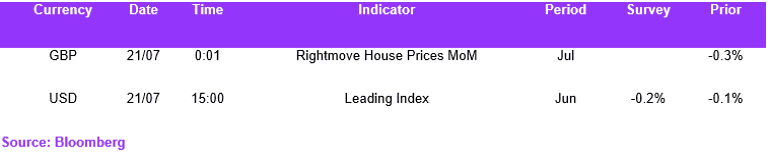
Economic Calendar