


EUR / USD
EUR/USD remains under sustained bearish pressure, trading around 1.1637 and holding well below its key moving averages, as we see a combination of European structural vulnerabilities and complex US labour market dynamics shaping the outlook. February’s nonfarm payroll report showed a contraction of 92,000 jobs against expectations for a gain of around 59,000 — a significant downside surprise that would normally weaken the dollar by accelerating expectations of Federal Reserve easing. However, we see the labour deterioration occurring alongside clear stagflationary signals, including manufacturing input prices reaching their highest levels since 2022 and rising long-term unemployment, which complicates the usual dovish policy response.
At the same time, the eurozone faces persistent structural headwinds. We see the region’s reliance on imported energy continuing to weigh on growth prospects, while Germany’s exports have fallen 2.3% month-on-month and eurozone GDP growth is projected at only around 1.2% for 2026. This leaves the ECB navigating a difficult balance between inflation risks and weak activity. Markets have begun to shift from earlier expectations of easing towards the possibility of tightening by mid-2026, though we expect this shift to provide only limited support for the euro while energy-related risks remain elevated.
Technically, EUR/USD maintains a bearish bias, with RSI near 38 reflecting continued downside momentum since the late-January high around 1.2042. We expect a decisive break below the 1.1508 low to confirm further downside towards support near 1.1440. Conversely, any recovery would need to reclaim the 200-day and 20-day SMA cluster near 1.17 to signal a meaningful stabilisation in trend. While the payroll shock could trigger intermittent dollar softness, we see rallies likely to be sold into given the eurozone’s greater vulnerability to energy shocks and geopolitical risk.
USD / JPY
Source: Massive (polygon.io)
USD/JPY is trading within an environment heavily influenced by energy market disruption stemming from Middle Eastern tensions. We see higher oil prices creating a paradox for the yen: while they lift global inflation expectations and support US yields, they simultaneously worsen Japan’s trade balance given the country’s heavy reliance on imported energy. This dynamic has contributed to persistent yen weakness over recent months.
Japanese government bond yields have edged higher despite the Bank of Japan’s accommodative stance, suggesting markets are increasingly pricing stagflationary risks that could limit the BoJ’s room for manoeuvre. At the same time, we expect the dollar to continue drawing support from safe-haven demand and expectations that US interest rates will remain elevated for longer.
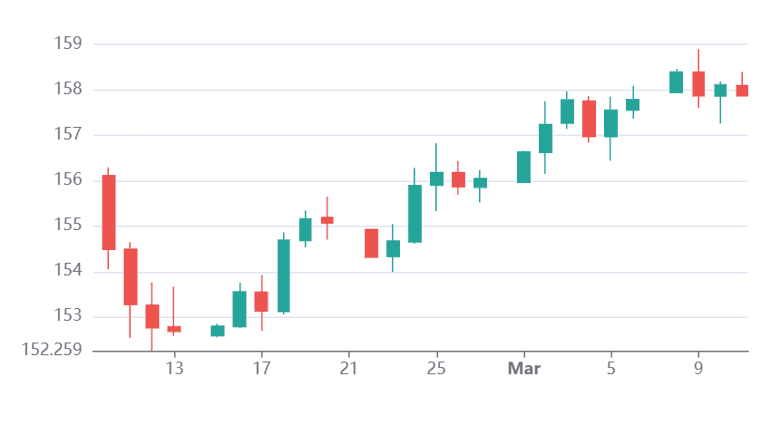
Technically, USD/JPY has traded within a relatively narrow range, dipping towards 157.40 before rebounding into the 158.10–158.30 area. The pair is currently near 158 and remains comfortably above key trend indicators, including the 20-day SMA near 156.15, the 50-day SMA around 156.00, the 30-day VWAP near 155.83 and the 200-day SMA close to 152.75. RSI around 63.7 reflects firm bullish momentum. We expect continued defence of the 158 area to open the path towards resistance at 159 and potentially a retest of the January high near 159.34. However, failure to hold above this level could trigger profit-taking and a pullback towards the 156–156.15 support zone, particularly after the extended rally from the mid-February lows near 152.50.
GBP / USD
Source: Massive (polygon.io)
GBP/USD remains under pressure as safe-haven demand linked to escalating Middle Eastern tensions and energy market disruption continues to support the dollar. We see the UK’s structural vulnerability to energy import shocks placing sterling at a relative disadvantage, as higher energy costs simultaneously weaken household purchasing power and restrict the Bank of England’s policy flexibility.
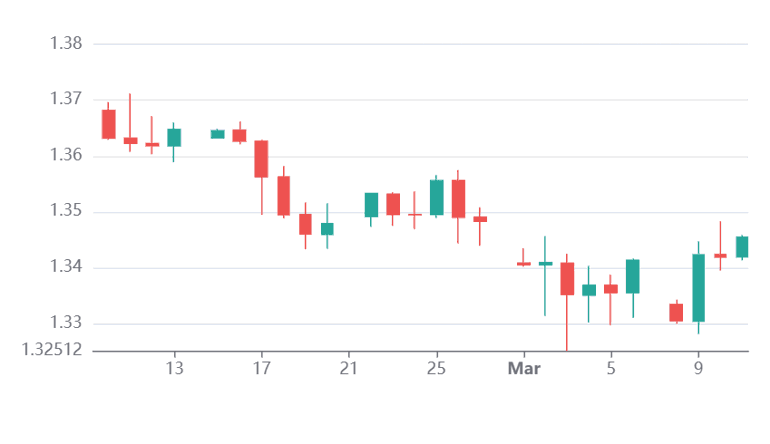
This divergence with the United States — where inflation expectations remain relatively anchored and domestic energy exposure is lower — has reinforced dollar demand. Technically, GBP/USD remains capped beneath a strong resistance cluster formed by the 20-day and 50-day SMAs and the 30-day VWAP near 1.35. The 200-day SMA around 1.34 continues to represent the most important nearby support.
We expect volatility to remain elevated as markets assess the stagflationary signals emerging from the US economy, including labour weakness and tariff-related manufacturing job losses estimated at roughly 100,000 since early 2025. These forces complicate the usual relationship between weaker US employment and dollar performance. A sustained break above 1.35 would require a meaningful shift in geopolitical risk sentiment or US labour dynamics. Conversely, we see a rejection at this level potentially exposing the 1.3290 support area established earlier in March.

