


EUR / USD
Source: Massive (polygon.io)
EUR/USD remains under significant downward pressure and we see the geopolitical crisis surrounding the Strait of Hormuz as the dominant driver. The prolonged disruption to global energy flows continues to create a highly asymmetric impact, with the eurozone facing materially greater vulnerability as a major energy importer while the United States remains comparatively insulated. We expect elevated oil prices above USD 110 per barrel to sustain inflation pressures across Europe and deepen concerns around stagflation risks.
We see the European Central Bank facing an increasingly difficult policy backdrop, with higher energy costs threatening growth while simultaneously pushing inflation expectations higher. At the same time, rising US Treasury yields and fading expectations for Federal Reserve easing continue to support the dollar. We expect this widening policy divergence to remain a structural headwind for EUR/USD in the near term.
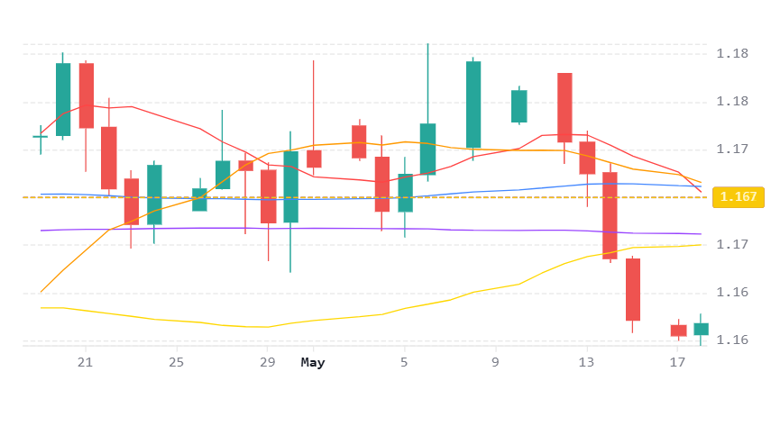
From a technical perspective, EUR/USD is trading around 1.1621 below the key moving average cluster near 1.17, while daily RSI near 40 suggests momentum remains weak. We see a break below the 1.1600 support area as likely opening the path towards 1.1450, while any recovery attempts may struggle below the 1.17 resistance zone. Looking ahead, we expect FOMC minutes, flash PMIs and developments surrounding the Hormuz crisis to remain the key drivers.
USD / JPY
Source: Massive (polygon.io)
USD/JPY continues to be supported by a powerful combination of yield differentials, elevated energy prices and Japan’s vulnerability as a major energy importer. We see the spread between US and Japanese yields continuing to favour the dollar, with US ten year yields near 4.63% maintaining strong support for capital inflows into dollar denominated assets.
Japan’s fiscal backdrop is adding further pressure. We expect additional fiscal spending measures aimed at cushioning the impact of the Middle East conflict to increase concerns around an already elevated debt burden. While markets continue to price a Bank of Japan rate increase, we see external pressures from higher oil prices and widening trade deficits limiting the upside potential for the yen.
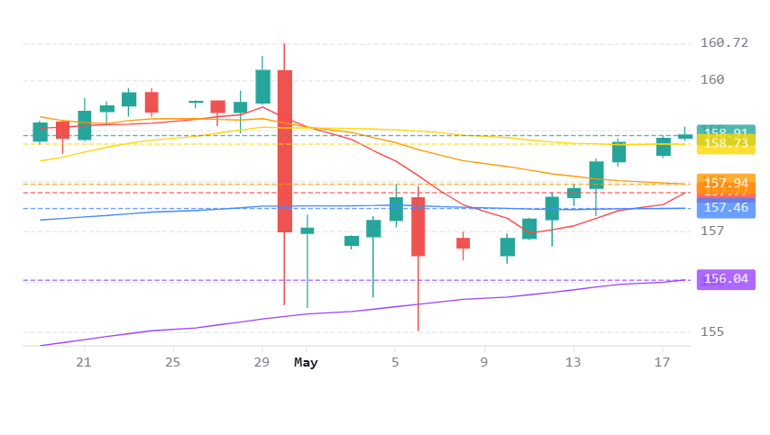
From a technical perspective, USD/JPY is trading around 159 and remains above both the 50 day moving average and the 30 day VWAP near 158.48, while RSI at 56 points to modest bullish momentum. We expect sustained trade above the 159 area to support a move towards resistance at 159.25 and potentially a retest of the monthly high near 160.65. However, intervention risks may rise sharply should the pair approach the psychologically important 160 level.
GBP / USD
Source: Massive (polygon.io)
GBP/USD remains under considerable pressure and we see several headwinds continuing to weigh on sterling. The sharp rise in oil prices alongside broader geopolitical uncertainty has reinforced demand for the dollar, while the United Kingdom’s dependence on imported energy leaves the economy particularly exposed to higher costs.
We see domestic political uncertainty adding another layer of pressure. Concerns surrounding fiscal stability and renewed political risks have driven gilt yields to multi year highs, reviving comparisons with previous episodes of market stress. At the same time, we expect the Bank of England to remain trapped between controlling inflation and avoiding further damage to an already fragile growth backdrop.
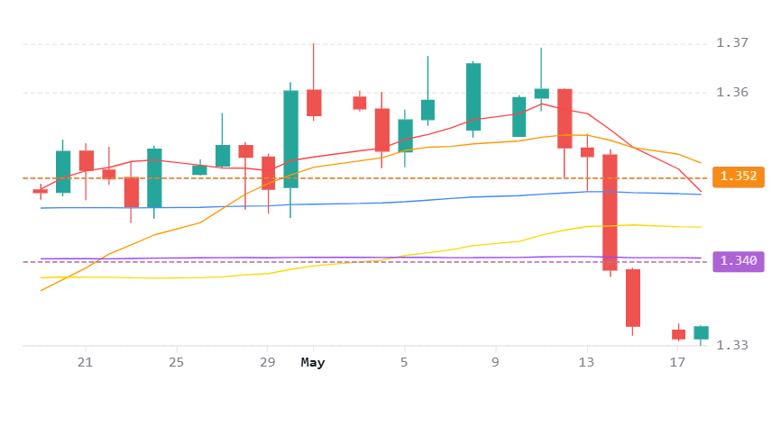
From a technical perspective, GBP/USD is trading around 1.3324 below both the 20 day and 50 day moving averages, while RSI near 36 suggests momentum is becoming stretched. We see scope for a short term recovery from oversold conditions toward the 1.34 region. However, we expect a break below 1.3300 to reinforce downside pressure and expose support at 1.3253 and potentially the March low near 1.3172, particularly if geopolitical tensions remain elevated and dollar strength persists.


