


EUR / USD
Source: Massive (polygon.io)
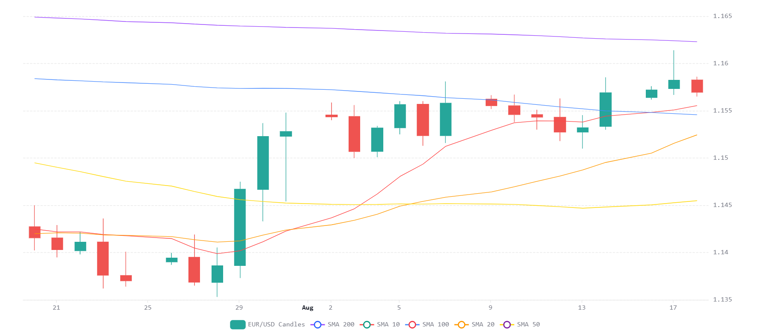
EUR/USD is consolidating near recent highs after briefly reaching a two month peak around 1.1614, supported by a significant repricing of Federal Reserve policy expectations. Softer US retail sales, weaker employment data and subdued inflation have reduced the probability of a September Fed rate increase to around 30% to 35%, weighing on the dollar and encouraging an unwind of previously elevated long dollar positioning. This has pushed the Dollar Index towards multi month lows and provided a supportive backdrop for the euro.
Technically, however, the recovery is encountering an important hurdle. The 200 day SMA around 1.1600 has capped the latest advance, while the 20 day and 50 day SMAs and the 30 day VWAP clustered near 1.1500 provide a relatively firm support base. We see a sustained break above 1.1600 as necessary to strengthen the bullish structure and open the way towards the April highs around 1.1835. Failure to clear this resistance could instead encourage profit taking and a return towards 1.1500.
Geopolitical developments remain an important source of uncertainty. Brent crude above USD 91 per barrel is reviving energy driven inflation concerns, particularly for the eurozone, where inflation has already risen to 2.9%. While expectations of further ECB tightening provide some support, markets remain cautious about whether higher rates in response to an energy shock can translate into sustained euro strength. This week’s Fed minutes should therefore be pivotal in determining whether recent dollar weakness can extend.
USD / JPY
Source: Massive (polygon.io)
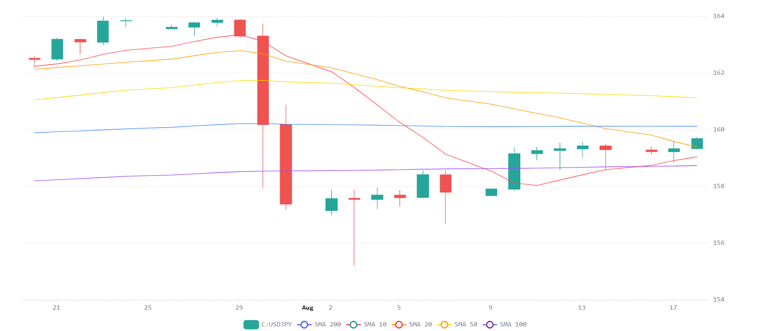
USD/JPY is trading around 159.69, having recovered from its early August lows near 156 but remaining below important overhead resistance. The pair is holding above the 200 day and 20 day SMAs around 159, while the 30 day VWAP near 160.45 and the 50 day SMA around 161 continue to cap the recovery. This leaves the technical picture finely balanced, with buyers defending support but struggling to establish a stronger upward trend.
The fundamental backdrop is increasingly challenging for the dollar. Markets are assigning around an 80% probability to another BoJ rate increase in September, while Japanese 10 year yields have climbed towards three decade highs around 2.93%. At the same time, weaker US data has reduced expectations of a September Fed increase to around 35%. We expect this gradual narrowing of policy expectations to become more supportive for the yen, although elevated US long term yields continue to preserve a sizeable carry advantage for the dollar.
Energy prices remain an additional complication, with Brent above USD 91 per barrel worsening Japan’s import costs and limiting the yen’s ability to benefit fully from a more hawkish BoJ outlook. We see 160.45 as the immediate upside hurdle, with a sustained break potentially opening the way towards 161. Conversely, renewed rejection around this area, combined with firmer BoJ tightening expectations, could push the pair back towards the 158 to 159 support region.
GBP / USD
Source: Massive (polygon.io)
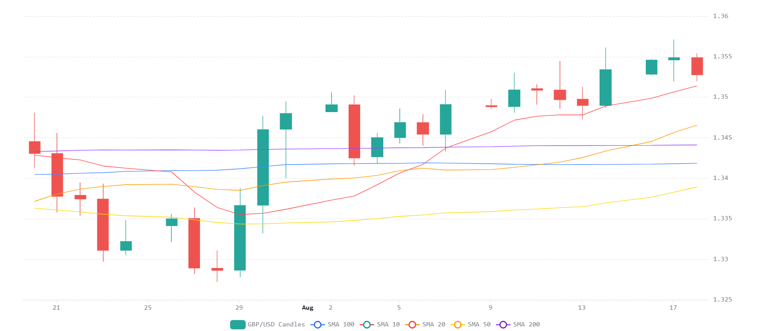
GBP/USD remains close to three month highs, supported by softer US data and a more favourable relative policy outlook for sterling. Weaker US retail sales, employment and inflation readings have reduced the probability of a September Fed rate increase to around 35%, weighing on the dollar. Meanwhile, relatively hawkish BoE commentary and stronger than expected UK growth have shifted expectations away from further easing and towards the possibility of another rate increase.
Technically, GBP/USD remains comfortably above the 50 day and 200 day SMAs around 1.3400, while the 20 day SMA near 1.3500 provides more immediate support. Resistance around 1.3563 has repeatedly capped the advance, however, with the latest rejection pulling the pair back towards 1.3528. We see a sustained break above 1.3563 as necessary to extend the bullish trend, while a loss of 1.3500 could encourage a deeper correction towards the moving average cluster around 1.3400.
Attention now turns to UK employment data, particularly wage growth, which should help determine whether the recent hawkish shift in BoE expectations can be sustained. Stronger figures could provide the catalyst for another test of 1.3563, while weaker data would leave sterling more vulnerable to a correction. Elevated energy prices and geopolitical uncertainty remain important downside risks, particularly if renewed safe haven demand allows the dollar to regain some of its recent losses.


