


EUR / USD
Source: Massive (polygon.io)
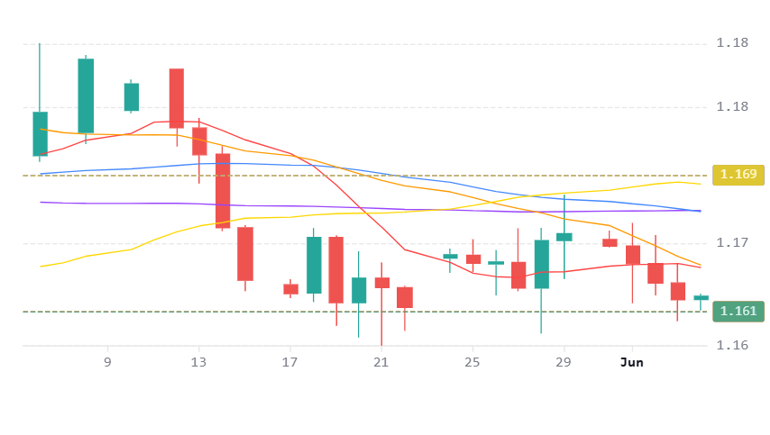
EUR/USD remains under sustained pressure, trading near 1.1611 and continuing to struggle beneath a significant resistance cluster around 1.1700, where the 200 day SMA, 50 day SMA and 30 day VWAP remain closely aligned. The daily RSI at 43 highlights weak momentum and suggests sellers continue to retain control, while support around 1.1585 remains the key level protecting the pair from a deeper decline.
The fundamental backdrop continues to favour the dollar. US economic data has remained resilient, with ISM Services PMI rising to 54.5 and the gap between US and eurozone economic momentum widening further. Markets have responded by increasingly pricing a higher for longer Federal Reserve stance, with expectations for further tightening rising materially over the past month. In contrast, the ECB remains trapped between elevated inflation and deteriorating growth conditions, with Germany already in recession and broader eurozone activity remaining subdued.
Geopolitical developments continue to add pressure to the euro. Elevated oil prices linked to tensions in the Persian Gulf represent a disproportionately negative shock for the eurozone given its reliance on imported energy. While a June ECB rate increase appears highly likely, we see limited support for the euro unless policymakers can convince markets that tighter policy will not further undermine growth.
Looking ahead, Friday's US nonfarm payrolls report remains the key catalyst. A stronger labour market reading would reinforce the dollar's yield advantage and could push EUR/USD through the 1.1585 support area, opening the way towards 1.1570 and potentially the March low near 1.1415. Conversely, softer data may trigger a corrective recovery, although we would expect the 1.1700 resistance zone to remain difficult to overcome.
USD / JPY
Source: Massive (polygon.io)
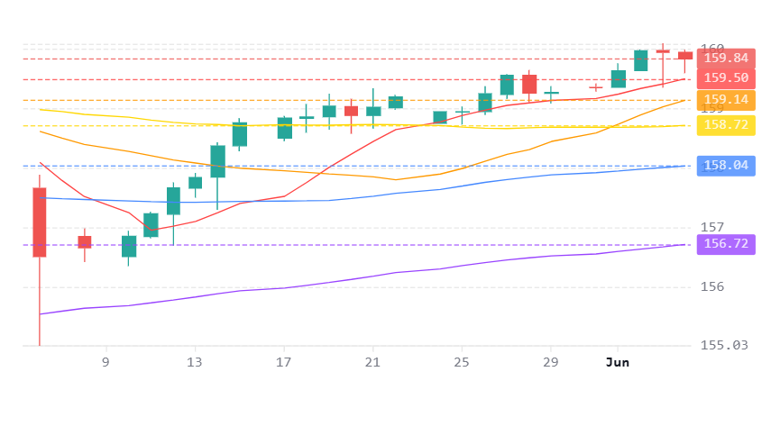
USD/JPY remains focused on the psychologically important 160 level, trading around 159.85 after briefly touching 160.10 before encountering renewed selling interest. The pair remains firmly supported above its key moving averages, with the 20 day and 50 day SMAs both near 159 and the 200 day SMA around 157. Daily RSI at 62 points to firm momentum, although markets are becoming increasingly cautious as intervention risks rise.
The primary driver remains the wide US Japan yield differential. Strong US economic data and fading expectations for Federal Reserve easing continue to support carry trade demand, while the Bank of Japan's expected rate increase has so far done little to materially alter the broader rate advantage enjoyed by the dollar. Although markets now assign a very high probability to a June Bank of Japan rate increase, many investors remain sceptical that gradual policy normalisation alone will be sufficient to generate a sustained yen recovery.
Higher energy prices continue to create an additional headwind for Japan by worsening its trade balance and increasing imported inflation pressures. At the same time, the recent intervention campaign has been almost entirely unwound, highlighting the market's willingness to challenge official efforts to support the currency.
Looking ahead, the key question is whether USD/JPY can establish itself above 160. A sustained break could bring the April high near 160.65 and eventually the multi year high near 162 into focus. However, intervention risk remains elevated and any failure to hold above 160 could encourage profit taking towards the 158.40 to 159.00 support region.
GBP / USD
Source: Massive (polygon.io)
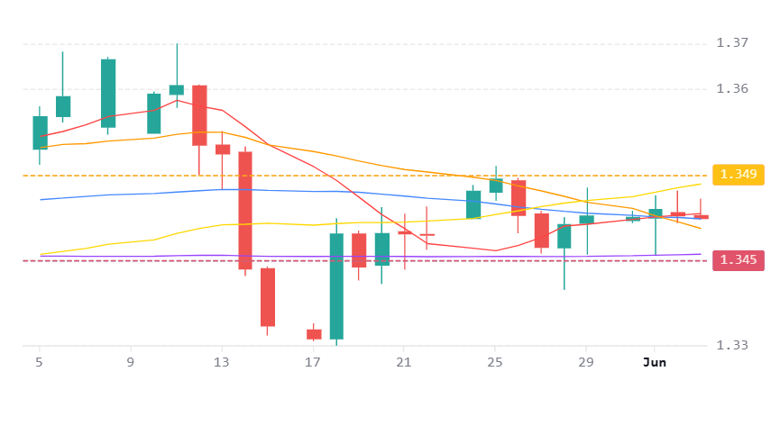
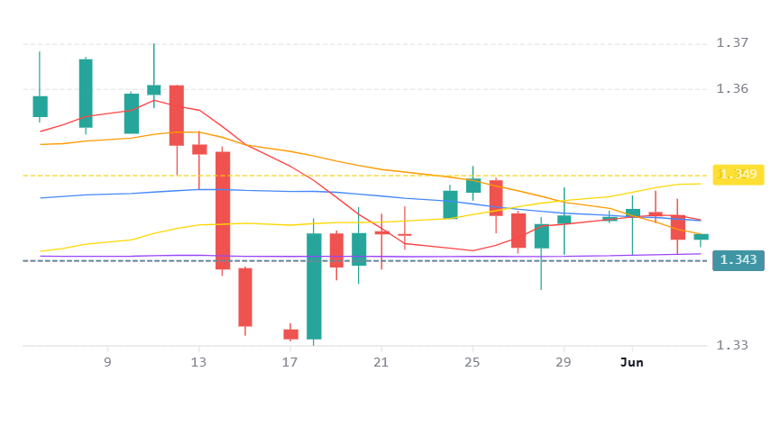
GBP/USD remains under pressure, trading near 1.3431 and caught between support at the 200 day SMA around 1.3400 and resistance from the 50 day SMA near 1.3450. This tightening range reflects increasing uncertainty ahead of several major central bank meetings and important US labour market data.
The fundamental backdrop remains challenging for sterling. Resilient US economic data continues to support expectations that the Federal Reserve will maintain a restrictive policy stance, reinforcing demand for the dollar. While the Bank of England has adopted a relatively hawkish stance, markets increasingly view further tightening as a response to imported inflation rather than evidence of underlying economic strength.
Domestic conditions also remain difficult. UK services activity slipped into contraction during May and consumer confidence continues to soften as higher energy costs weigh on household spending. Political uncertainty and fiscal concerns remain additional headwinds that continue to limit investor enthusiasm towards sterling.
Looking ahead, Friday's US nonfarm payrolls report will provide the first major catalyst before a dense run of central bank meetings later in the month. We continue to see risks tilted modestly to the downside while the pair remains below the 1.3450 resistance area. A break beneath 1.3400 would expose support near 1.3270, while a recovery above 1.3450 would be required to improve the near term outlook and shift momentum back in favour of sterling.

