


EUR / USD
Source: Massive (polygon.io)
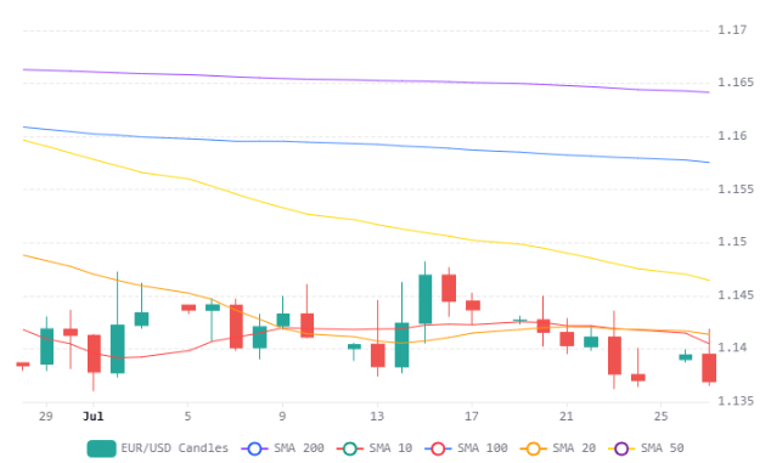
EUR/USD remains trapped in a technically vulnerable position, trading near 1.1371 with all major moving averages, including the 20-day SMA at 1.1415—aligned overhead as formidable resistance, while the recent support at 1.1362 is capping persistent bearish momentum. Still, the pair's rejection from the 1.1416 high underscores the euro's structural weakness, with the 1.1335 support zone representing the critical line of defence before potential acceleration toward 1.1300.
Fundamentally, the 125-basis-point interest rate differential between the Fed's 3.50-3.75% target range and the ECB's 2.25% deposit rate remains the dominant driver, with markets now pricing a 33-38% probability of a further Fed hike on Wednesday—a sharp increase from 12% just two weeks ago—fuelled by oil prices above $100 and U.S. headline CPI running at 3.5%. The eurozone's contrasting backdrop of a 0.2% GDP contraction in Q1 2026 and easing inflation from 3.2% to 2.8% limits any hawkish ECB repricing, reinforcing the yield disadvantage facing the euro. Geopolitical risks add asymmetric downside for EUR/USD, as any breakdown in the fragile U.S.-Iran diplomatic pause would push oil higher, disproportionately hurting the energy-import-dependent eurozone while reinforcing the Fed's hawkish stance.
The week's data calendar—featuring U.S. Q2 GDP, PCE inflation, and non-farm payrolls alongside the Fed decision—creates the conditions for a decisive break from the current consolidation range. A hawkish Fed outcome combined with a failure to hold 1.1365-1.1370 support would likely trigger a move through 1.1335 toward 1.1300, while only a dovish surprise or sustained geopolitical de-escalation could provide the catalyst for short-covering back toward the 1.14-1.1485 resistance zone.
USD / JPY
Source: Massive (polygon.io)
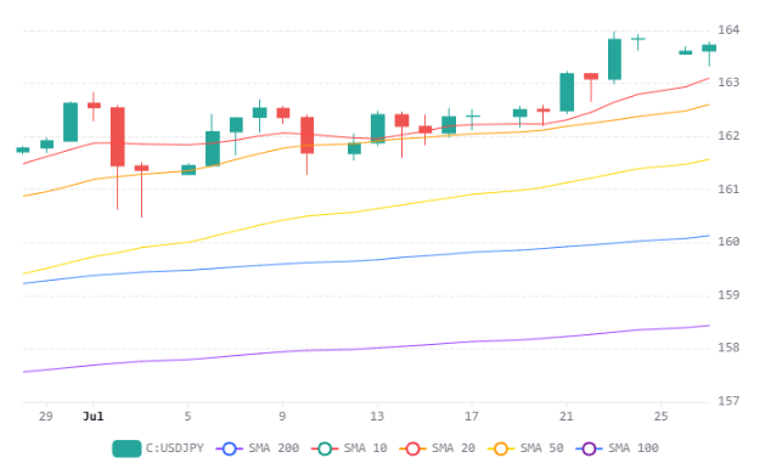
The USD/JPY pair is consolidating just below its all-time high near 164, trading in a narrow 0.33% range as markets await critical central bank decisions from both the Federal Reserve and Bank of Japan this week. The pair remains technically well-supported above key moving averages—including the 20-day SMA at 162.52—while the daily RSI near 69 signals firm bullish momentum without yet reaching extreme overbought territory. The enormous interest rate differential between the U.S. and Japan continues to fuel carry trade activity favouring the dollar, keeping the yen pinned near 40-year lows.
The macro backdrop is showing early signs of shifting in the yen's favour, as the pause in U.S.-Iran hostilities has driven Brent crude down approximately 8%, structurally benefiting Japan's terms of trade as one of the world's largest energy importers. With 86% of economists expecting the BOJ to raise rates to 1.25% before year-end, the yield differential that has weighed heavily on the yen should begin to narrow, though the pace of any appreciation remains constrained by current rate gaps.
From a technical perspective, the key inflection point is whether USD/JPY can decisively break above the 164 handle; failure to do so risks forming a double-top pattern that could trigger profit-taking back toward the 162.37–162.60 support zone. The combination of Fed policy uncertainty under Chair Warsh, intensifying Japanese verbal intervention warnings, and growing institutional consensus around yen recovery suggests the pair's risk-reward profile is becoming increasingly asymmetric to the downside, even as near-term momentum still favours dollar bulls.
GBP / USD
Source: Massive (polygon.io)
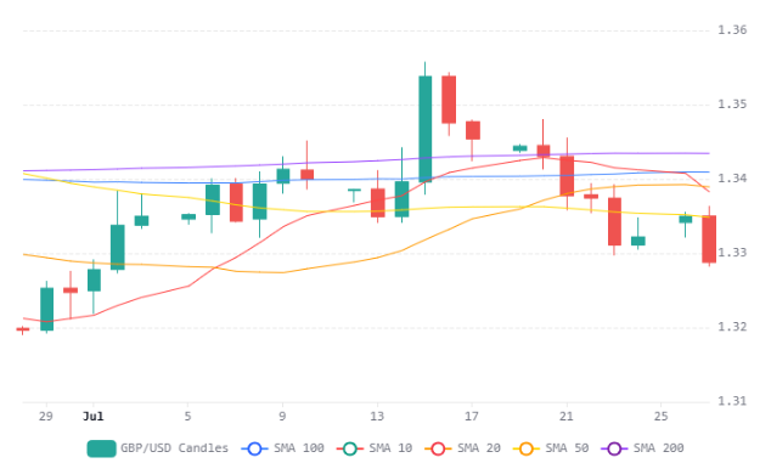
GBP/USD declined approximately 0.22% over the recent period, sliding from around 1.3319 to 1.3290 after briefly touching 1.3363 during early Asian hours on Monday before sellers took control, with the pair now trading below both its 200-day and 20-day moving averages at 1.34 while the daily RSI has dropped to roughly 42. The pound received a brief lift from the sharp 8-9% decline in Brent crude prices, which eases imported inflation pressures for the energy-dependent UK economy, but sterling's gains proved short-lived as the dollar's structural appeal reasserted itself.
The fundamental backdrop heavily favours the greenback heading into this week's central bank decisions, with US inflation elevated at 3.5% on headline CPI and markets pricing a 35-38% probability of a Fed rate hike, while the Bank of England is widely expected to hold at 3.75% amid cooling UK inflation at 2.6%, rising unemployment at 4.9%, and slowing wage growth to 3.4%. The interest rate differential between the two currencies has narrowed to approximately 0-25 basis points in favour of the UK, diminishing carry-trade support for the pound and leaving the pair acutely sensitive to shifts in relative central bank rhetoric.
From a technical perspective, the 1.3300 level was breached late Monday and the 50-day SMA at the same level now serves as immediate overhead resistance, with the bearish scenario targeting acceleration toward 1.3150 support if momentum selling continues beneath 1.3290. The combination of the Fed's tone on inflation, the BoE's guidance, and Friday's US PCE data will likely determine whether the pair stabilizes at current levels or extends its decline toward the June low near 1.3147.
Economic Calendar


