


EUR / USD
Source: Massive (polygon.io)
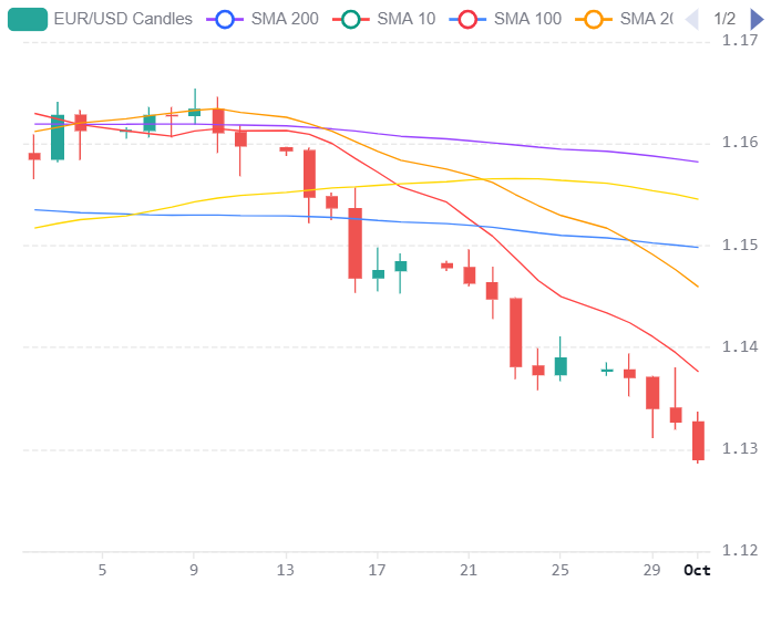
EUR/USD remains under severe pressure around 1.1290, marking a fresh 17 month low after the euro lost almost 2.5% during September. The widening divergence between US and eurozone economic conditions remains a central driver, with elevated Treasury yields increasing the relative appeal of US assets. At the same time, the energy shock is weighing more heavily on the import dependent eurozone, where higher costs threaten to sustain inflation while simultaneously weakening growth.
The European backdrop remains challenging despite some improvement in economic data. Stronger manufacturing activity and unemployment around 6.4% provide modest support, but rising input costs, fiscal concerns and political uncertainty are limiting the euro’s ability to benefit from ECB tightening. We see the combination of weaker growth prospects and persistent inflation as particularly difficult for the ECB, as further tightening risks adding pressure to an already fragile economic outlook.
Technically, EUR/USD remains well below its major moving averages around 1.1500, while the daily RSI near 18 signals extremely oversold conditions. We expect this degree of technical exhaustion to increase the likelihood of a corrective recovery, with 1.1500 representing the key resistance area should short covering emerge. However, failure to defend 1.1290 would reinforce the broader downward structure and could expose the 1.1200 region.
USD / JPY
Source: Massive (polygon.io)
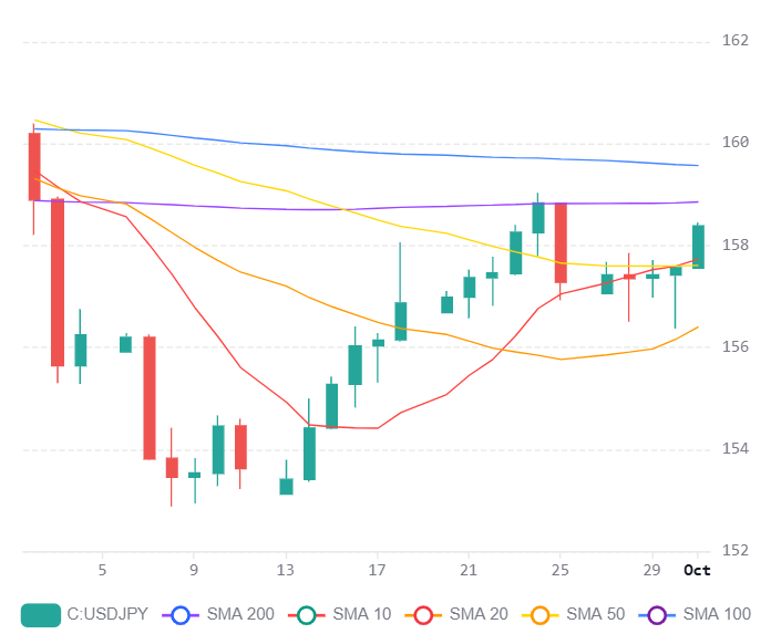
USD/JPY has advanced to around 158.39 as the widening US Japan yield differential continues to support the pair. US Treasury yields have risen towards 5.3%, while Japanese yields have failed to increase at the same pace despite the BoJ raising its policy rate to 1.25%. Expectations of another near term BoJ move remain relatively subdued, while expansionary fiscal policy and increasingly cautious signals around additional tightening continue to weigh on the yen.
Technically, USD/JPY has moved above both the 20 day SMA around 156 and the 50 day SMA near 158, improving the short term structure. However, the 200 day SMA around 159 remains the critical resistance level. The daily RSI around 58 confirms strengthening momentum without indicating overbought conditions. We see a sustained break above 159 opening the way towards the psychologically important 160 level.
Conversely, another rejection around the 200 day SMA could encourage a retracement towards the 50 day SMA near 158, followed by the 30 day VWAP around 157. Elevated energy costs and continued foreign outflows from Japanese bonds provide additional headwinds for the yen, although intervention concerns could limit the extent of further weakness. We expect Friday’s US nonfarm payrolls report to be particularly important in determining whether the current yield differential can continue to support USD/JPY.
GBP / USD
Source: Massive (polygon.io)
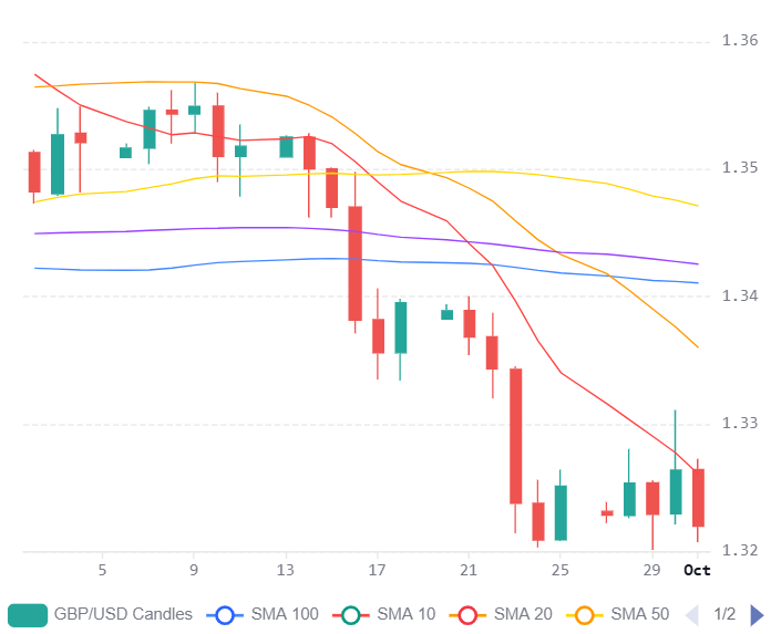
GBP/USD remains under pressure around 1.3219 after losing more than 3% over the past month. The pair is now trading comfortably below the 20 day, 50 day and 200 day SMAs concentrated around 1.3400 to 1.3500, reflecting a significant deterioration in the technical structure. Elevated US Treasury yields continue to increase the relative attractiveness of dollar denominated assets and remain an important headwind for sterling.
The UK backdrop is also becoming increasingly challenging. Long term gilt yields have risen sharply as markets price persistent inflation and the possibility of further BoE tightening, but higher borrowing costs are simultaneously reducing fiscal flexibility and placing additional pressure on interest rate sensitive parts of the economy. We see this combination of elevated inflation, higher yields and weaker domestic activity as limiting sterling’s ability to recover sustainably while US yields remain elevated.
The daily RSI around 32 suggests the decline is becoming increasingly stretched and leaves scope for a short covering recovery towards the 1.3400 resistance region. However, we expect downside risks to remain elevated while GBP/USD stays below its major moving averages. A sustained break below 1.3205 would bring the June low around 1.3147 into focus, while Friday’s US nonfarm payrolls report could provide the next major catalyst for either an extension of the decline or a corrective sterling recovery.


