EUR / USD
Source: Massive (polygon.io)
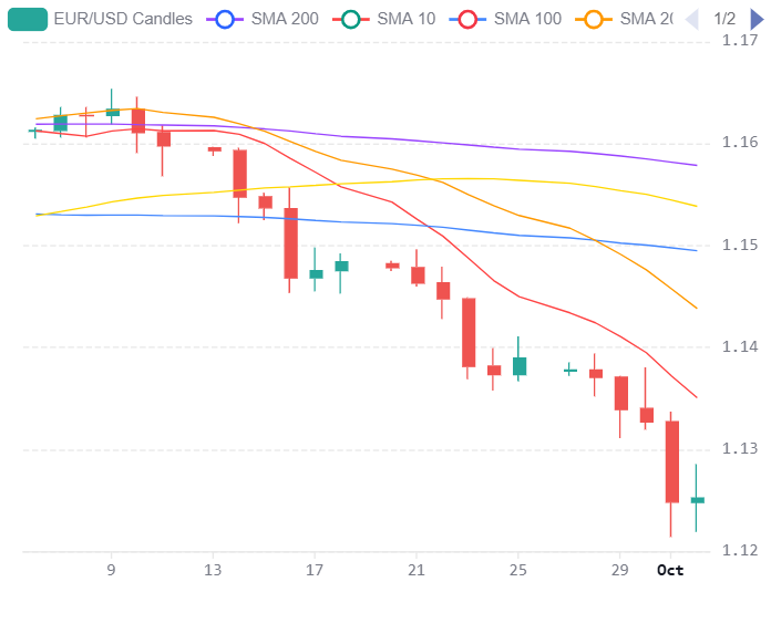
EUR/USD remains under significant pressure around 1.1252, having lost more than 3.5% over the past month as elevated US yields and a substantial transatlantic rate differential continue to favour the dollar. The Fed’s policy rate of 3.75% to 4.00% remains well above the ECB’s 2.50%, while the US 10 year Treasury yield around 5.28% continues to increase the relative appeal of US assets. Eurozone stagflation risks and elevated French sovereign yields provide additional headwinds for the single currency.
However, the latest US employment report has challenged expectations of further Fed tightening, with just 29,000 jobs added against expectations of 90,000 and previous months revised lower. The probability of another Fed increase has consequently fallen from around 66% to 22%, providing some scope for dollar strength to moderate. We see this shift as supportive of a near term EUR/USD recovery, although oil prices above USD 100 per barrel continue to complicate the Fed outlook by sustaining inflationary pressures.
Technically, EUR/USD remains well below the 20 day, 50 day and 200 day SMAs, confirming that the broader structure remains bearish. However, the daily RSI around 17 indicates exceptionally oversold conditions and increases the likelihood of a corrective recovery from support around 1.1220. We expect short covering to provide scope for a move towards the 20 day SMA near 1.1400, although this region should provide significant resistance while eurozone fundamentals remain fragile.
USD / JPY
Source: Massive (polygon.io)
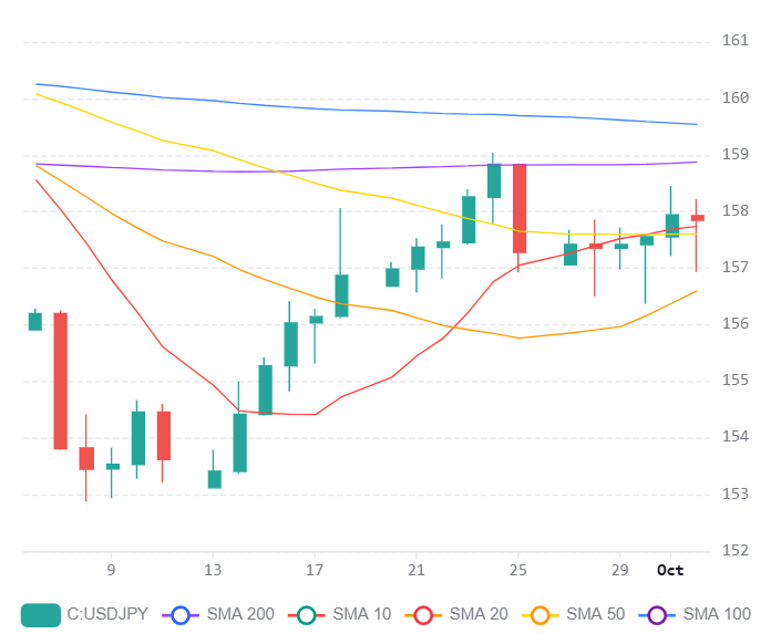
USD/JPY remains caught between elevated US yields and expectations of further Japanese policy normalisation, with the pair trading around 157.85. The Fed’s September rate increase has maintained a sizeable US Japan interest rate differential despite the BoJ raising its own policy rate to 1.25%. However, the unexpectedly weak US employment report has significantly reduced expectations of another Fed increase, potentially weakening one of the principal sources of support for USD/JPY.
Japan’s domestic backdrop remains challenging. Persistent weakness in real household spending and elevated food prices highlight the difficult balance facing the BoJ, as yen depreciation adds to imported inflation while more aggressive tightening risks further weakening consumption. Political and fiscal uncertainty provides another potential headwind for the yen. We see these competing forces limiting the scope for a decisive directional move until markets receive greater clarity on the respective policy paths.
Technically, USD/JPY remains above the 50 day SMA around 157.61 but below the 200 day SMA near 158.86, while the daily RSI around 55 indicates modest upward momentum. A sustained break through 158.30 to 158.86 would strengthen the bullish structure, while rejection from this area could return attention towards 157.00 and 156.60. We expect Governor Ueda’s upcoming remarks and the FOMC minutes to be important catalysts for determining whether the recent narrowing in Fed expectations can translate into more sustained yen strength.
GBP / USD
Source: Massive (polygon.io)
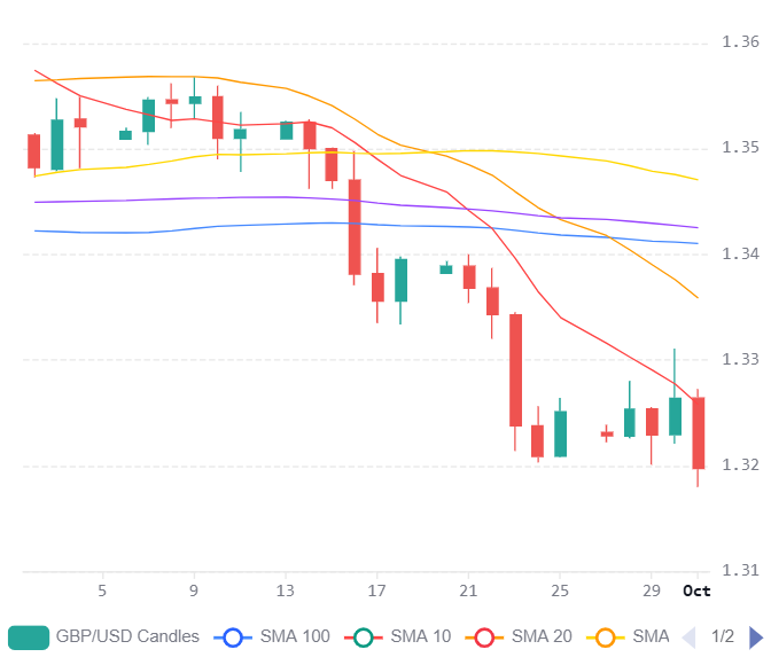
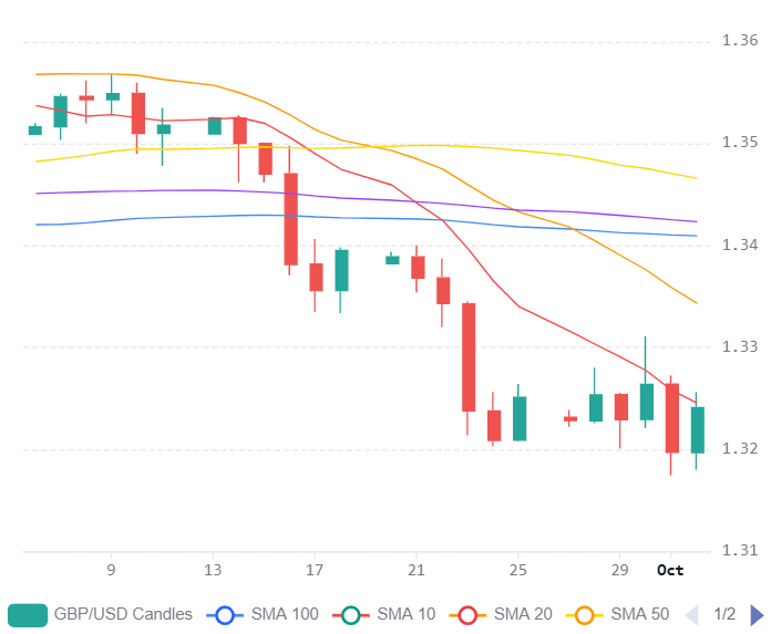
GBP/USD remains in a broadly bearish structure around 1.3241, trading below the 20 day SMA near 1.3300, the 200 day SMA around 1.3400 and the 50 day SMA near 1.3500. The pair has declined almost 3% from its late August highs as elevated US yields, the Fed’s September rate increase and geopolitical uncertainty have supported the dollar.
The latest US employment report could provide sterling with some near term relief. Payroll growth of just 29,000, alongside downward revisions to previous months, has reduced the probability of another Fed increase from around 66% to 22%. The UK backdrop has also shown some resilience, with upward revisions to GDP providing modest fundamental support. We see the repeated defence of the 1.3192 area as an initial indication that selling pressure may be beginning to stabilise.
A recovery above the 20 day SMA around 1.3300 would strengthen the case for a corrective move towards 1.3358, although the broader structure would remain weak below the 200 day SMA around 1.3400. Conversely, a break below 1.3175 would expose the June low near 1.3147 and potentially 1.3100. We expect the FOMC minutes and BoE Governor Bailey’s remarks to provide the next major tests for rate expectations, with any sterling recovery likely to remain constrained unless the deterioration in US economic data becomes more persistent.
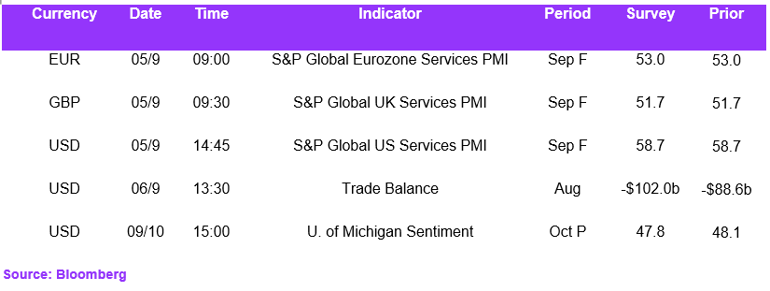
Economic Calendar