


EUR / USD
Source: Massive (polygon.io)
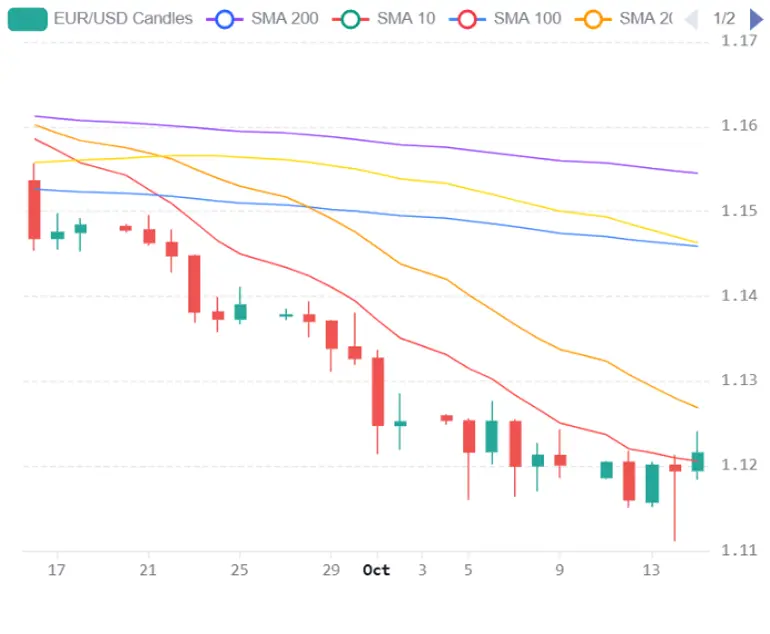
EUR/USD has recovered to around 1.1215 following a volatile session in which the pair briefly fell to 1.1113, as shifting Fed expectations provided some relief from recent dollar strength. US headline inflation accelerated to 3.7% year on year in September, with core inflation reaching 2.6%. However, dovish commentary from Fed officials has reduced expectations of another rate increase in October, with markets now assigning around a 73% to 75% probability to a hold. The resulting decline in US Treasury yields has provided some support for the euro, although the ECB’s more cautious policy outlook and persistent European fiscal concerns continue to limit its recovery.
Technically, EUR/USD remains below the 20 day SMA around 1.1300 and the 50 day and 200 day SMAs clustered near 1.1500, maintaining the broader bearish structure. The daily RSI has recovered towards 34 from deeply oversold territory, suggesting that selling pressure is beginning to moderate. We see the repeated defence of the 1.1115 region as a tentative indication of stabilisation, although a sustained move above 1.1300 would be required to establish a more convincing recovery.
We expect upcoming US producer price and retail sales data, alongside Fed Chair Warsh’s remarks, to provide further direction for rate expectations. Continued moderation in US yields could support another test of 1.1300, particularly if incoming data reinforce expectations of a Fed pause. Conversely, renewed dollar demand or a deterioration in global risk sentiment could return attention towards 1.1115. For now, the broader outlook remains cautiously bearish while EUR/USD trades below its major moving averages and eurozone fiscal uncertainty persists.
USD / JPY
Source: Massive (polygon.io)
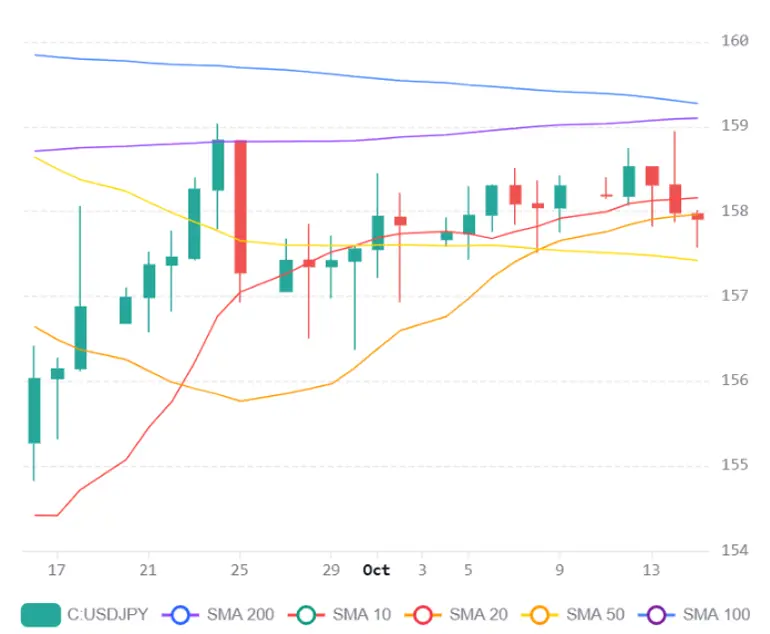
USD/JPY has retreated to around 157.90 after briefly approaching the 200 day SMA near 159.00, as softer US Treasury yields and expectations of further Japanese policy normalisation limited the dollar’s advance. Although September US inflation accelerated to 3.7%, dovish remarks from Fed officials have tempered expectations of additional tightening in October. Meanwhile, the BoJ continues to signal a gradual approach towards further rate increases, with persistent domestic inflation strengthening the case for additional tightening beyond its current policy rate of 1.25%.
The prospect of increased domestic bond investment by Japanese institutional investors provides another potential source of yen support. With Japanese government bond yields rising above 3%, domestic fixed income assets have become more attractive relative to currency hedged US Treasuries, potentially encouraging capital to return to Japan. We see this development, alongside intervention concerns, as an increasingly important constraint on sustained USD/JPY upside, even while the broader US Japan interest rate differential remains substantial.
Technically, USD/JPY has struggled to overcome the 200 day SMA near 159.00, with the recent rejection weakening upward momentum. The daily RSI has moderated towards 52, reflecting a more neutral technical picture. We see the 50 day SMA around 157.40 and the 30 day VWAP near 157.30 as important support levels, with a sustained break potentially exposing deeper downside towards the September lows around 153.00. Conversely, a recovery above 159.00 would be required to restore a more constructive outlook, although we expect intervention risks and further BoJ tightening expectations to limit gains towards 160.00.
GBP / USD
Source: Massive (polygon.io)
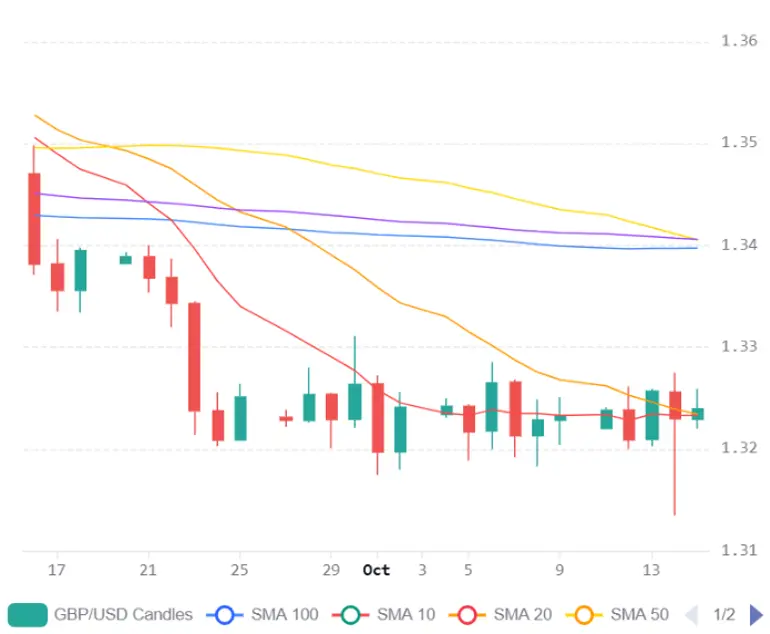
GBP/USD has recovered to around 1.3240 following a sharp decline towards 1.3138, supported by softer US Treasury yields and reduced expectations of another Fed rate increase in October. Although September US inflation accelerated to 3.7%, cautious commentary from Fed officials has reinforced expectations of a near term pause, providing some relief for sterling. Meanwhile, persistent UK inflation and wage pressures continue to support expectations of further BoE tightening, although policymakers remain divided over the appropriate pace of additional increases.
The domestic backdrop remains challenging, with elevated gilt yields and uncertainty ahead of the UK budget on 28 October weighing on investor confidence. UK 10 year yields above 5.4% reflect persistent concerns over inflation and fiscal sustainability, while weaker growth prospects could constrain the BoE’s ability to tighten further. We see these competing pressures limiting sterling’s recovery potential, particularly if upcoming UK economic data point towards further weakness in domestic activity.
Technically, GBP/USD remains below the 30 day VWAP around 1.3300 and the 50 day and 200 day SMAs clustered near 1.3400, maintaining the broader bearish structure despite the latest rebound. We expect 1.3300 to provide the immediate resistance test, with a sustained break potentially opening the way towards 1.3400. Conversely, failure to defend 1.3200 would increase the likelihood of another move towards 1.3138 to 1.3150. For now, the balance of risks remains modestly tilted to the downside, although further moderation in US rate expectations could provide scope for a corrective sterling recovery.

