EUR / USD
EUR/USD held its nerve yesterday, maintaining the 14% gain against the dollar so far this year and holding above 1.17, supported by unexpected eurozone economic strength and a hawkish ECB stance. Recent ECB communications, particularly from Governing Council member Holzmann, have firmly dismissed the possibility of rate cuts through 2025, creating a stark contrast with the Federal Reserve's more dovish trajectory.
Technical analysis reveals strong support levels, with the pair maintaining positions above both the 20-day moving average at 1.165 and the 50-day moving average at 1.145, while the relative strength index at 61.59 indicates sustained bullish momentum. The potential EU-US trade framework agreement ahead of the August 1st tariff deadline could provide additional stability for the euro, though concerns persist about the impact of potential US tariffs and the effects of euro strength on European corporate profits.
The currency pair's future movements appear to hinge on the diverging monetary policies between the ECB and the Fed, with markets currently pricing in more aggressive rate cuts from the Federal Reserve. While a breakthrough above 1.18 remains possible if economic data continues to support ECB hawkishness, the pair could face downward pressure if concerns about trade tensions and export competitiveness begin to materialise.
USD / JPY
USD/JPY hovered at recent highs of 146.50, albeit yesterday's momentum indicates softening upside pressures. While the introduction of 25% tariffs on Japanese goods by President Trump, effective August 1st, has created additional pressure on the yen, former BoJ board member Sakurai's indication of no policy changes until at least March 2026 reinforces the dovish outlook, helping to keep the pair rangebound.
Technical indicators show the pair maintaining position above key moving averages at 144.7 and 145.1, are now providing robust support. The combination of BoJ dovishness, US tariff pressures, and upcoming Japanese political events suggests continued yen weakness, with potential for movement toward 148.4 if US economic data remains strong, though risk aversion and any hints of BoJ policy normalization could drive the pair toward support at 142.3.
GBP / USD
GBP/USD currently operates in a challenging macroeconomic environment, with the UK facing growing fiscal headwinds and persistent inflationary pressures that are impacting sterling's performance. Technical analysis shows the pair trading within a tight range between 1.358 and 1.361, maintaining a position above major moving averages despite a recent modest decline of 0.11%.
The Bank of England's cautious stance on monetary policy, coupled with the government's limited fiscal headroom, creates additional uncertainty for the currency pair's trajectory. While the UK's early trade deal with the US provides some buffer against global trade tensions, the technical resistance at 1.364 presents immediate hurdles for upward movement.
A bullish breakout above 1.364 could target 1.378, though this potential is tempered by the UK's deteriorating fiscal position and sluggish economic growth. The currency pair's immediate support lies at the 50-day moving average of 1.35, with a breach below this level potentially triggering a deeper correction toward 1.338.
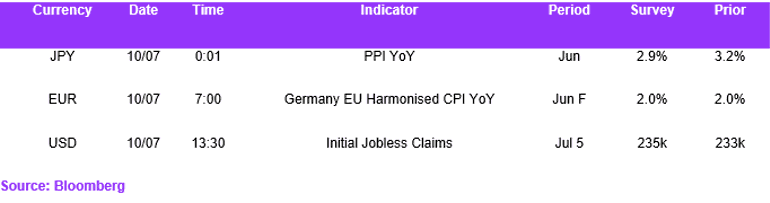
Economic Calendar