EUR / USD
The EUR/USD pair edged higher as diverging monetary policy expectations between the Fed and the ECB continue to shape market dynamics. Recent ECB communications suggest they are approaching the end of their rate-cutting cycle, while markets anticipate 40-50 basis points of Fed rate cuts by year-end, creating a favourable interest rate differential for the euro.
The pair's technical structure shows historical resilience with near-term mixed signals, with prices hovering near critical levels around 1.1680 at the 50 DMA and finding resistance at the 20-day moving average 1.1741, with upside momentum appearing to be limited. The RSI of 50.00 indicates a balanced near-term momentum, suggesting a supported pair at the current level.
Eurozone economic sentiment, while showing marginal improvement to 95.5 in September, remains in pessimistic territory, constraining the euro's potential for significant appreciation. The upcoming US employment data and government shutdown developments will likely determine near-term direction, with the euro requiring positive surprises from the Eurozone economy to mount a sustained recovery. A breakthrough above 1.1780 could signal a bullish shift targeting 1.1870, while a decline below 1.1650 might trigger a deeper correction toward the psychological 1.1600 level.
USD / JPY
USD/JPY faces mounting pressure as Bank of Japan board member Noguchi's hawkish comments fuel expectations of policy normalisation in October, marking a potential shift from the long-standing ultra-loose monetary stance. Recent Japanese economic indicators, including the July leading index reaching a 4-month high, provide support for the BOJ's case for policy adjustment, while market participants closely monitor the upcoming Tankan survey and Governor Ueda's speech for further direction.
Technical analysis reveals the pair's resilience, maintaining positions above crucial moving averages despite a recent pullback from 149.50 to 148.60, with the 200-day moving average at 148.40 serving as a significant support level. The pair's trajectory is further complicated by US factors, including the looming government shutdown risk and its potential impact on key economic data releases, particularly the nonfarm payrolls report.
The technical outlook suggests potential for elevated levels if the pair breaks above 149.4, with a target of 150.9, though this bullish scenario must be weighed against the broader fundamental shifts occurring in both economies. The convergence of BOJ policy normalisation expectations and US economic uncertainties creates a complex trading environment, with the 147.1 support level serving as a crucial threshold for maintaining the current market structure.
GBP / USD
GBP/USD currently faces a complex trading environment, influenced by both technical indicators and fundamental factors. Technical analysis shows the pair trading above the 1.3320 support levels, though it remains below shorter-term moving averages, suggesting a period of consolidation with key resistance at 1.3700 and support at 1.3300.
The Bank of England's stance, with Deputy Governor Dave Ramsden signalling potential gradual rate cuts while maintaining focus on inflation targets, combined with UK Chancellor Rachel Reeves's emphasis on fiscal restraint, provides some underlying support for sterling. However, the pair faces headwinds from concerning UK economic data, while the Federal Reserve's recent rate cut and signals of further easing have somewhat tempered dollar strength.
The immediate outlook appears cautiously balanced, with the pair's direction likely to be determined by the resolution of the US government shutdown situation and upcoming economic data releases, while the RSI reading of 45 suggests neutral momentum with a slight bearish bias.
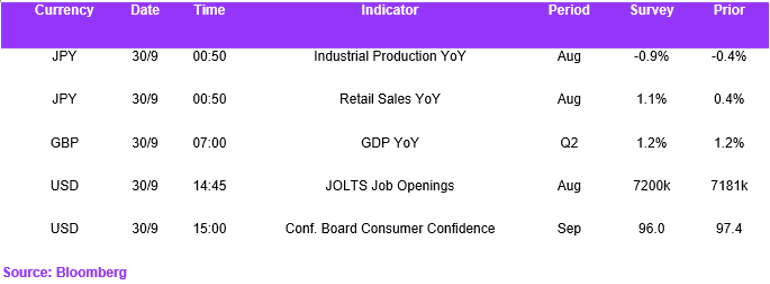
Economic Calendar