EUR / USD
The euro–dollar pair remains balanced between two opposing forces: the Eurozone’s lacklustre growth and the increasing likelihood of US monetary easing. European data continue to underline stagnation, with business confidence subdued and Germany’s industrial output showing little sign of recovery. The ECB maintains a cautious stance, emphasising that rate cuts are premature until underlying inflation cools further. In contrast, US data have shown a marked loss of momentum in recent weeks, with weaker ADP employment readings and a slowing services sector fuelling expectations of one or two Fed cuts by early 2026. This growing policy divergence has narrowed the yield gap between Europe and the US, providing some short-term support for the euro despite the region’s weak fundamentals.
From a market perspective, EUR/USD remains in consolidation, trading between the 200-day moving average at 1.150 and resistance near 1.170. The pair is currently anchored by the 30-day VWAP around 1.160, signalling equilibrium as investors weigh the direction of central bank policy. A stronger-than-expected German CPI print later today could steady the euro, but the broader trajectory will depend on how aggressively the Fed moves to ease policy against a backdrop of softening growth and a tentative US fiscal resolution. Volatility is likely to remain elevated, with short-term dips expected to attract buyers if US yields stay capped below 4%.
USD / JPY
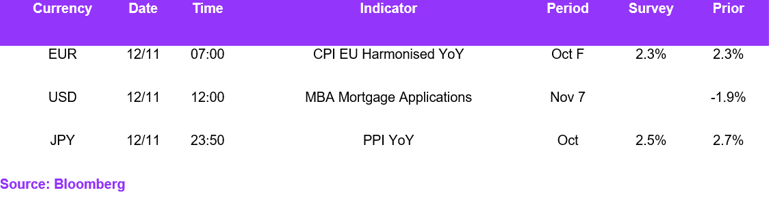
Dollar–yen remains a focal point for global FX markets as policy divergence between Washington and Tokyo persists. The pair continues to trade near multi-decade highs, supported by carry demand and Japan’s ultra-accommodative monetary stance. The latest summary of BoJ opinions showed that eight out of 13 board members favoured tightening “soon” or under specific conditions, yet softer producer inflation could delay any shift. The October PPI, expected to ease to 2.5% from 2.7%, may give policymakers justification to hold fire a little longer, aligning with Prime Minister Takaichi’s cautious tone. Nonetheless, market patience with Japan’s prolonged policy inertia is thinning, especially as imported inflation pressures remain high and the yen’s weakness fuels political unease.
Technically, USD/JPY continues to hover above its 50-day moving average at 150.9, with resistance seen at 154.4, a break above which could reopen the path toward the January high near 158.5. A softer PPI print would likely sustain upward momentum, while any surprise uptick could trigger a sharp, temporary yen rebound as traders speculate on an earlier BoJ pivot. Looking ahead, the next inflection point for the pair will come from the Fed’s communication: dovish rhetoric could cap the dollar’s upside, but as long as Japanese rates remain anchored, the yen’s recovery potential appears limited. Intervention risk remains the wild card, especially if volatility spikes or speculative positioning grows excessive.
GBP / USD
Sterling continues to face mounting pressure ahead of this week’s key UK GDP release. The economy is forecast to have expanded by just 0.2% QoQ in Q3, a slowdown from 0.3% in Q2 and far below the 0.7% pace seen at the start of the year, when exporters rushed shipments before new US tariffs. The latest labour market data show rising unemployment and slowing wage growth, reinforcing the view that the BoE could deliver a rate cut as early as December. In addition, reports suggest the Office for Budget Responsibility is preparing to downgrade its long-term productivity growth forecast from 1.0% to around 0.7%, a small but significant change that compounds over time, implying weaker tax receipts and a widening fiscal gap. This deterioration in the macro outlook leaves Chancellor Reeves with little room for manoeuvre in the 26 November budget, which could feature a mix of selective spending restraint and higher revenue measures.
The pound has been trading below key resistance at 1.34, with near-term support around 1.30. The technical setup remains fragile, as markets increasingly price in BoE easing while the dollar holds steady amid mixed US macro signals. A softer GDP print this week would likely trigger renewed selling pressure on sterling, driving gilt yields lower and reinforcing expectations for policy loosening. Conversely, any upside surprise could spark a brief relief rally, though sustained gains are unlikely until fiscal and productivity concerns are addressed. Over the coming weeks, attention will turn toward the BoE’s December meeting and the fiscal tone of the Autumn Statement, both of which will determine whether the UK enters 2026 with stabilising growth or sliding confidence.
Economic Calendar