EUR / USD
EUR/USD continues to exhibit sustained bullish momentum, underpinned by increasingly divergent monetary policy expectations between the Federal Reserve and the European Central Bank. Recent US data have reinforced a softer economic narrative, with unemployment rising to 4.6% and wage growth cooling materially, weighing on the dollar.
The Fed’s latest rate cut, alongside market expectations for around two additional cuts in 2026, has created a supportive backdrop for the euro, particularly as the ECB appears to have reached the end of its easing cycle. From a technical standpoint, momentum remains strong, with the pair testing the 1.18 level. However, an RSI reading of 71 highlights overbought conditions, raising the risk of a near-term consolidation or pullback.
Attention remains on the 1.16 area, where multiple moving averages converge and form an important medium-term pivot. A sustained break below this zone could open the door to a correction towards 1.15, while continued support above 1.17 would keep the broader upside bias intact and leave scope for fresh highs.
USD / JPY
Japanese data continue to strengthen the case for yen appreciation, with exports rising 6.1% year on year in November and shipments to the US rebounding by 8.8%, marking the first increase in eight months. Alongside this, a sharp 7% rise in core machinery orders adds weight to expectations that the Bank of Japan will raise rates to 0.75% at its December meeting, signalling a decisive shift in policy direction.
The narrowing interest-rate differential between the US and Japan is increasingly influential, as markets price in further Fed easing while the BOJ embarks on a gradual tightening path. Technically, USD/JPY is consolidating in a narrow range between 154.47 and 154.98, with the 50-day moving average at 154.70 providing near-term support.
A clear break above 156.02 would expose November’s high at 157.73, while a move below 154.03 would raise the risk of a deeper pullback towards the 152.00 area. Despite building yen momentum, carry dynamics continue to offer residual support to the dollar in the medium term.
GBP / USD
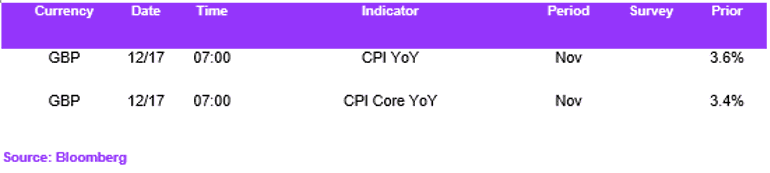
GBP/USD has shown notable strength, trading around the 1.34 area, although technical indicators suggest the pair may be approaching overbought territory. The UK macro backdrop remains mixed, with stagflation risks coming into sharper focus as unemployment rises to 5.1% while inflation remains elevated at 3.6%, the highest among G7 economies. That said, improved PMI readings, with December’s figure rising to 52.1, point to some underlying resilience.
Diverging policy expectations between the Bank of England and the Federal Reserve remain a key driver, particularly as the Fed adopts a more dovish tone. From a technical perspective, GBP/USD continues to trade within an ascending channel, suggesting the broader structure remains constructive despite near-term uncertainty.
Support is firmly established around 1.32, aligning with the 50-day moving average, while resistance near the 200-day moving average at 1.34 remains a critical hurdle. A sustained break above this level would strengthen the bullish case, while failure to hold support would shift focus back towards consolidation.
Economic Calendar