EUR / USD
The EUR/USD pair continues to face downward pressure primarily due to the significant interest rate differential of 1.5-1.75% between the ECB and Federal Reserve, with the Fed maintaining higher rates. Technical analysis reveals a weakening momentum as the pair trades between 1.16 and 1.17, with the RSI dropping to 50 and increased trading volume around the 1.175 level.
While Eurozone economic data shows relative stability with inflation near 2.9% and steady unemployment at 6.4%, growth remains modest at 0.6%, providing limited support for the euro. The US dollar benefits from higher bond yields, with US 10-year yields at 4.19% compared to Eurozone yields at 2.91%, though this spread has recently narrowed.
The appointment of a new Fed chair and potential acceleration of rate cuts could weigh on USD strength, while increasing geopolitical tensions, particularly regarding US intervention in Venezuela, may drive safe-haven flows toward the dollar. The pair's immediate technical outlook suggests that a break below the 50-day moving average at 1.17 could trigger further losses toward 1.157, while successful defense of the 200-day moving average at 1.16 might enable a recovery toward 1.180.
USD / JPY
The USD/JPY currency pair remains under significant pressure due to the substantial monetary policy divergence between the Federal Reserve and Bank of Japan, with the interest rate differential currently standing at approximately 225 basis points. Despite the Bank of Japan's recent rate hike to 0.75%, real interest rates in Japan remain deeply negative at around -2% after inflation adjustment, while the Federal Reserve maintains rates at 3.50-3.75%.
Technical analysis indicates strong bullish momentum, with the pair trading above key moving averages including the 200-day at 149.59 and the 50-day at 155.75, suggesting continued upward pressure. Japan's persistent challenges, including a debt-to-GDP ratio exceeding 250% and inflation at 2.9%, continue to weigh on the yen and limit the BOJ's ability to tighten monetary policy aggressively.
The recent surge in Japan's 10-year government bond yield to its highest level since 1995 has raised concerns about potential large-scale repatriation of overseas investments, while market participants closely monitor the BOJ's neutral rate guidance between 1-2.5%. Looking ahead, while the structural weakness in the yen may moderate as the Fed begins its anticipated easing cycle in 2026, the currency pair could target the 159.00 level if it breaks above the recent resistance at 157.75.
GBP / USD
The GBP/USD pair demonstrates resilience amid a shifting monetary policy landscape, with the Federal Reserve's dovish stance following three rate cuts in 2025 contrasting against the Bank of England's more hawkish position on inflation. Technical analysis reveals the currency pair maintaining levels above crucial support at 1.33, with multiple moving averages suggesting underlying strength in the current market structure.
The US labor market's softening, evidenced by unemployment reaching 4.6%, combined with expectations of further Fed rate cuts to 3.0-3.25% by December 2026, points toward continued dollar weakness. However, geopolitical tensions, particularly the US military intervention in Venezuela, introduce significant uncertainty that could drive safe-haven flows and impact currency movements through commodity price channels.
The technical outlook remains cautiously optimistic, with potential for upward movement if the pair breaks above the 1.35 resistance level, though the RSI reading of 59 suggests neutral momentum in the near term.
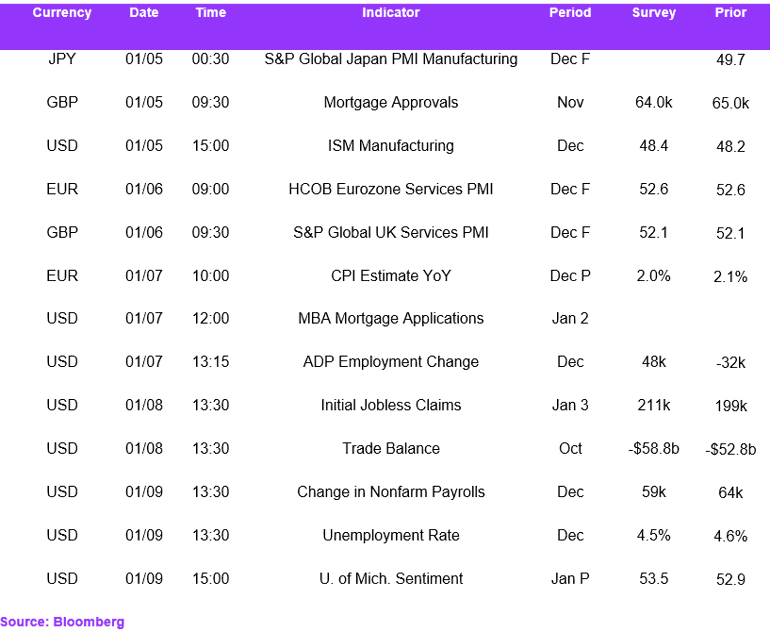
Economic Calendar