EUR / USD
EUR/USD faces significant headwinds as monetary policy divergence between the Fed and ECB continues to shape market dynamics. While the ECB maintains its deposit rate at 2.00% with a relatively hawkish stance, the Fed's recent 25bps rate cut to 3.75-4.00% has created an interesting policy contrast, though Powell's cautious tone regarding future cuts is creating market uncertainty regarding the Fed's December path.
The pair's technical picture shows concerning signs, trading below both the 50-day moving average at 1.1677 and the 1.1600 level, while maintaining a precarious position above the critical 1.1500 mark. Economic indicators present a mixed backdrop, with Eurozone manufacturing reaching expansion territory while US manufacturing continues to contract, though this divergence has yet to significantly impact currency movements.
The ongoing US government shutdown and its potential impact on Q4 GDP, combined with an RSI reading of 33.8 indicating oversold conditions, suggest the possibility of a potential bounce in the near term. The 1.1500 level represents a key support should the macroeconomic picture remain unchanged.
USD / JPY
While USD/JPY maintains its bullish trajectory, recent activity shows signs of moderating selling pressures on the yen as the pair approaches the key 155.00 threshold. Technical indicators reveal strong underlying support, with multiple moving averages trending upward beneath current price levels, including the 50-day SMA at 149.73 and the 20-day SMA at 152.37. The currency pair has demonstrated remarkable resilience around the 154.2 level, though market participants remain vigilant of potential intervention by Japanese authorities, particularly as the pair approaches the historically sensitive 155 territory.
The substantial interest rate differential of 3.25% between the US and Japan continues to attract carry trade opportunities. The Bank of Japan's persistently dovish stance, coupled with Prime Minister Takaichi's preference for accommodative policies, has placed considerable pressure on the Japanese yen, contrasting sharply with the Fed's more hawkish positioning.
Current macroeconomic dynamics underscore the continued weight on the yen. However, the anticipated gradual compression of the interest rate differential, as monetary policies evolve, as well as market caution around potential intervention, may introduce some moderation to the pair's upward momentum in the longer term.
GBP / USD
GBP/USD is showing signs of stabilisation around the 1.1310 mark as the Bank of England grapples with stagflationary conditions, characterised by high inflation at 3.8% and rising unemployment at 4.5%. Markets are pricing in no change in interest rates from the BoE this week, while the Fed injected a moderately hawkish stance. While this keeps the differential stable, fiscal uncertainty surrounding the upcoming Budget is weighing on UK prospects.
Technical analysis reveals the pair trading below key moving averages, including the crucial 200-day SMA at 1.3255, but price action traded in a narrow range, struggling below the 1.1310 level. Moreover, the severely oversold RSI reading of 27.76 suggests a potential technical rebound, though fundamental headwinds remain strong.
The pound's recent gains appear to be largely attributed to dollar weakness rather than inherent sterling strength. With markets reducing expectations for a December Fed rate cut to 65% from 90% previously, the near-term outlook for GBP/USD appears bearish, with support at 1.3110 and the psychological 1.3000 level in focus.
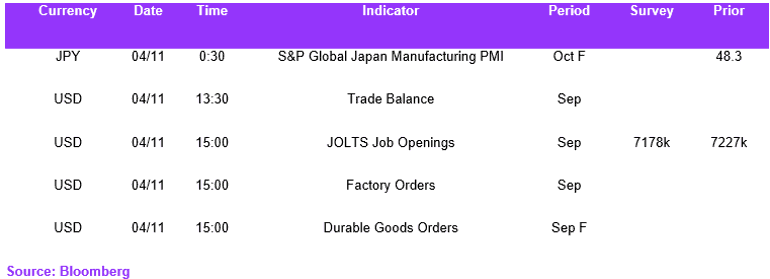
Economic Calendar